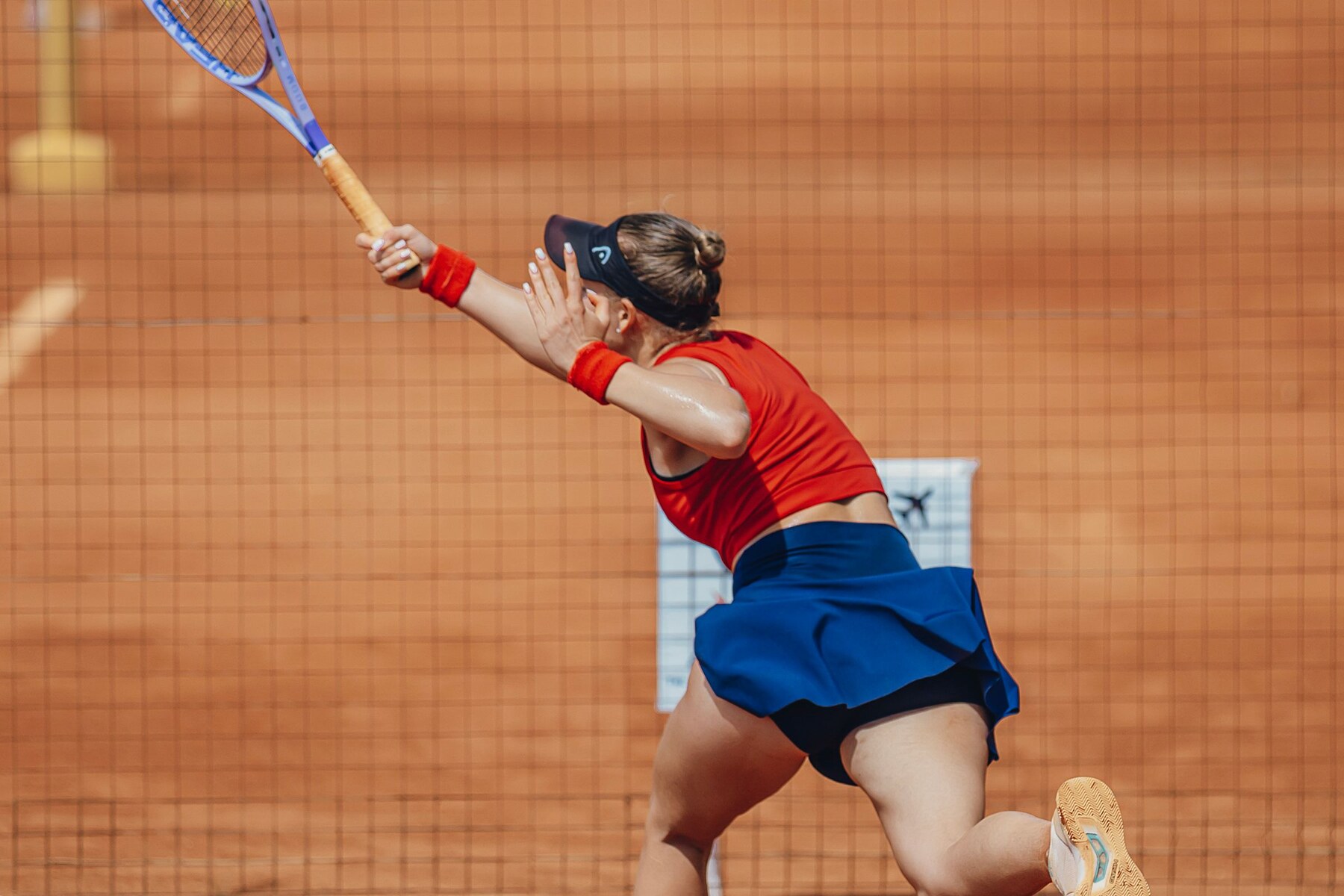
How do you move from the baseline to the net without rushing?
Treat the transition as a sequence: recognize the short ball, organize the approach, read the opponent’s contact, split and play a controlled first volley.
Choose one question, make time to work on it and notice what changes.
Treat the transition as a sequence: recognize the short ball, organize the approach, read the opponent’s contact, split and play a controlled first volley.
Develop more accurate placements and test whether they hold up in points.
Build movement, hitting, serves and returns into a warm-up that fits your tennis.
Separate face angle from racket travel, then compare height and depth.
Start with a shared task, add uncertainty, then test it in points.
Use Federer’s example to judge the opponent’s contact and your next opportunity.
Świątek’s adjustment against Rybakina explains the tradeoff between time and space.
How can you compete to win while developing a better game?Use Alcaraz’s choices to think about your contact, the opponent and the next ball.
Establish a baseline, change one condition and retest the same task.
Separate timing, spacing and rhythm—and organize before contact.
Read the incoming ball, choose a usable target and prepare for the reply.
A coach’s perspective on Gallwey’s first lesson, attention and lasting learning.
Change the target when the server stays back or moves in.
Record the task, conditions, evidence and one next adjustment.
Understand the feet, the incoming ball, and why coaching advice changes.
A generous crosscourt target, a clear task and one adjustment at a time.
A timed practice based on your goal, partner and facilities.
The existing Development Assessment organizes your own observations.
Make independent practice part of your development.