Change direction when the ball gives you a usable shot
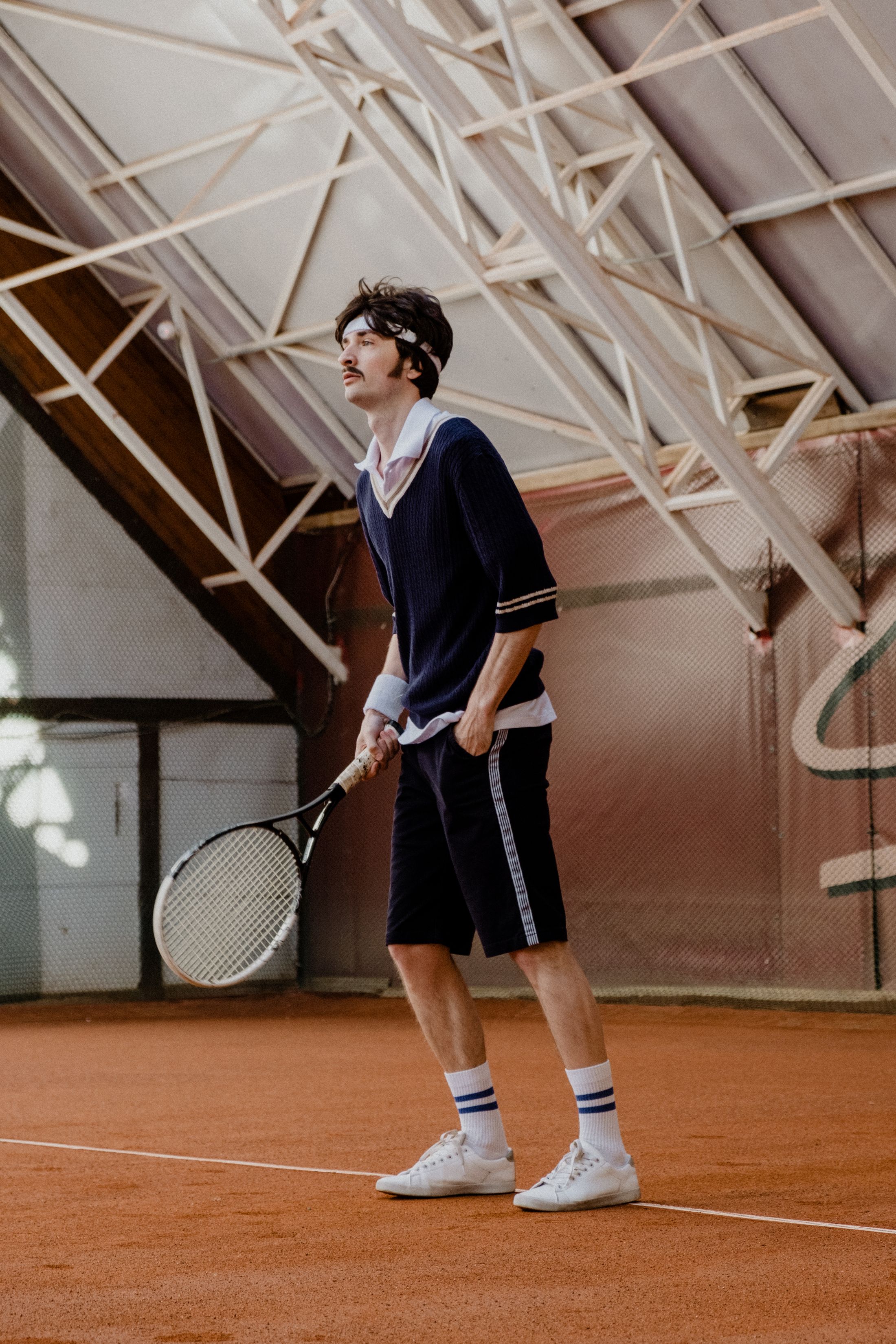
You have traded four crosscourt groundstrokes. The opposite corner looks empty, so you send the next ball down the line—and miss wide. The problem may be the decision before the swing: you tried to use an opening while the incoming ball was still pushing you backward.
In singles, consider changing direction when you can organize a comfortable contact, aim at a generous target and give the opponent a harder next ball. A shorter, slower ball can create that opportunity. It does not guarantee one. If you are reaching, crowded or scrambling, keeping the exchange crosscourt or using a deep central target is often a more workable choice.
This guide offers coaching suggestions for recreational singles, not a rule that every player must follow. USTA’s Yellow Ball practice curriculum teaches direction changes through a game that asks players to wait for a short ball or manageable ball near the baseline. The useful idea is to recognize the opportunity, rather than change direction because a rally has lasted long enough.
Read your contact before you look for the empty corner
Down the line means sending the ball along your side of the court toward the opposite end. It does not mean landing on the sideline. Imagine a landing window inside the singles sideline and comfortably short of the baseline. Make that window larger when your control is less reliable.
Ask three questions as the ball arrives: Can I get space to swing? Can I meet it at a height I can control? What will this direction make the opponent do? These are preparation questions, not a checklist to recite during contact. Practice makes the situations more recognizable.
USTA’s green-ball development plan evaluates ball recognition, time and balance together when teaching direction changes. Although written for junior development, that coaching distinction is useful here: reaching a ball and being ready to redirect it are different things. A balanced shot does not require perfectly still feet.
Three balls that can look like the same opportunity
First, a deep crosscourt ball pushes you behind the baseline. Your opponent may still be far from the other corner, but you are retreating and contact is uncomfortable. Try a higher, controlled reply toward a broad crosscourt or central area. The immediate job is to regain a playable position, not to find the most distant empty patch.
Second, a shorter ball arrives around a comfortable waist-height contact and you have time to move into position. Your opponent remains toward the crosscourt side. This is a reasonable down-the-line opportunity: use enough margin to make them move, then prepare for another shot. You do not need a winner to improve the point.
Third, a short ball stays low and pulls you forward. It is short, but you must lift it over the net. Do not treat it like the previous waist-high ball. Depending on your skills and the opponent’s position, a controlled placement or approach may be more realistic than a hard drive. The bounce location alone cannot choose the shot.
If the opponent has already recovered toward the supposedly open side, reconsider the target. You are playing the person’s current position and movement, not the position they occupied when the rally started.
Leave room beside the line—and plan for the reply
The ITF specifies a singles court 78 feet long and 27 feet wide. A diagonal between opposite baseline corners is longer than the straight length of the court. The net is also lower at its center than at its supports. These geometric facts help explain the appeal of a broad crosscourt rally, but they do not make every diagonal safe or every line shot reckless. Your actual contact, target and ball flight matter.
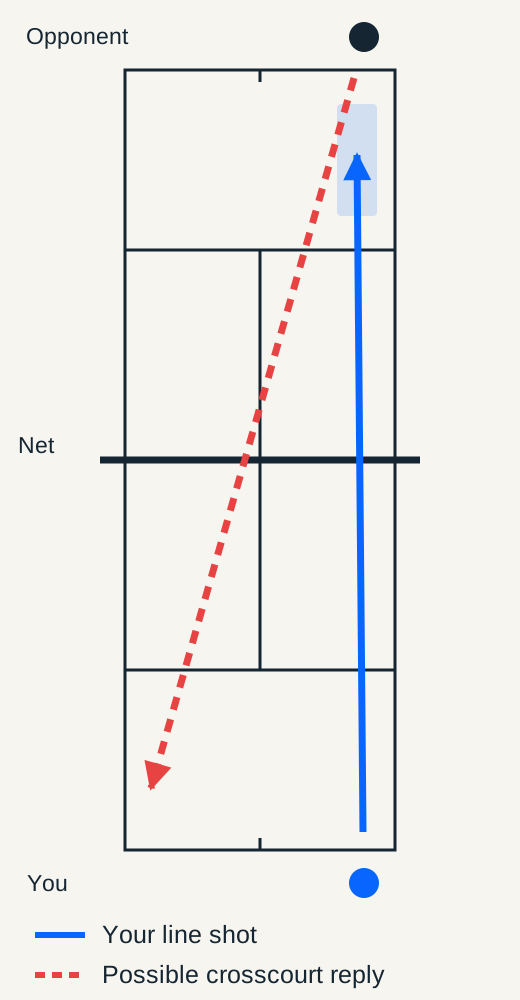
A down-the-line shot also changes the opponent’s reply options. From your right side, sending the ball straight ahead can let the opponent reply crosscourt toward your left. If you admire your shot from its contact position, a perfectly playable reply may become difficult to reach.
Recover while reading what your shot has actually done. A stretched opponent, a comfortable opponent and an opponent coming forward present different problems. Do not run automatically to the exact center mark or assume they must hit crosscourt. The diagram shows one possible reply, not a prediction.
Practice the choice, not a compulsory fifth-ball attack
After warming up, try this two-player singles game. It adapts the direction-change idea in USTA’s Yellow Ball curriculum; the following scoring and review are GEN Tennis coaching suggestions.
Begin with a cooperative crosscourt feed and continue crosscourt. One player is the chooser: they may go down the line when they see a usable ball. After that change, the whole singles court is open to both players. If no opportunity comes, keep the rally going. Swap roles after five starts, then repeat from the other diagonal.
Keep the normal point result, but discuss the decision separately after each rally. Was contact manageable? Did the shot move or pressure the opponent? Was the chooser ready for the next ball? A missed shot from a sensible opportunity is a different practice problem from a lucky winner hit while falling away.
If the rally breaks before either player can choose, reduce the pace or use cooperative feeds that occasionally offer a shorter ball. If everything is easy, make the feeds less predictable. Finish with ordinary points where either player can change direction at any time. Look for the same recognition without the exercise’s restrictions.
Use the next session to identify one adjustment
If most line attempts happen while you are stretched, work on selection. If you choose manageable balls but repeatedly miss the same target, take that directional-control problem to practice or a coach. If your first shot works and the reply beats you, work on recovery. These observations lead to different sessions.
Louis Cayer’s singles-tactics teaching material connects the incoming ball, a player’s position and the opponent’s movement with the decision being trained. Our practical version is simple: choose a ball you can use, choose a target you can reach and stay involved in the point after you hit it.
In FLOW Tennis’s Read → Move → Organize → Strike → Recover sequence, this is a practical connection between reading the ball and organizing the shot you can actually play. Recovery then belongs to the decision, too. It is a coaching framework, not proof that one target will always work.
Our editorial standards · Questions or corrections? Contact the editor.
Sources
- USTA: Yellow Ball practice plans — “I’m the Boss,” printed page 69 (2019)
- USTA: Taking Control of the Point — ball recognition, balance and direction changes (2018)
- ITF: 2026 Rules of Tennis — Rule 1, court and net dimensions
- Louis Cayer: Singles tactics — teaching material hosted by Tennis Canada (2005)
Keep reading.
Why your tennis rally keeps breaking down—and what to change
Timing, spacing and rhythm in tennis: move into the shot, not into the ball