First, make the exchange easier to understand
If a cooperative tennis rally keeps ending after two or three shots, first agree on a generous target, a manageable pace and a repeatable start. Then notice how the exchange ends and change one condition. A missed ball is useful information, but it does not, by itself, tell you which part of your swing needs fixing.
This guide is for two players who can already exchange groundstrokes and want more useful repetitions. It is not a technical diagnosis or a promise that one drill will repair every miss. If the full court is still overwhelming, the slower-ball beginner guide linked below offers a different starting point.
Agree whether you are cooperating or competing
One player thinks the task is to keep the ball moving. The other sees a short ball and tries to finish the point. Both are doing something recognizable as tennis, but they are not practicing the same thing. Before the first feed, say what a successful exchange looks like: controlled crosscourt shots that give each other a realistic next contact.
That does not mean hitting every ball directly at your partner's shoes. Give the ball a landing area and your partner room to move. Save winners and sudden changes of direction for a separate competitive round. The distinction lets you tell whether the agreed task is becoming more repeatable.
Choose a broad diagonal, not a sideline
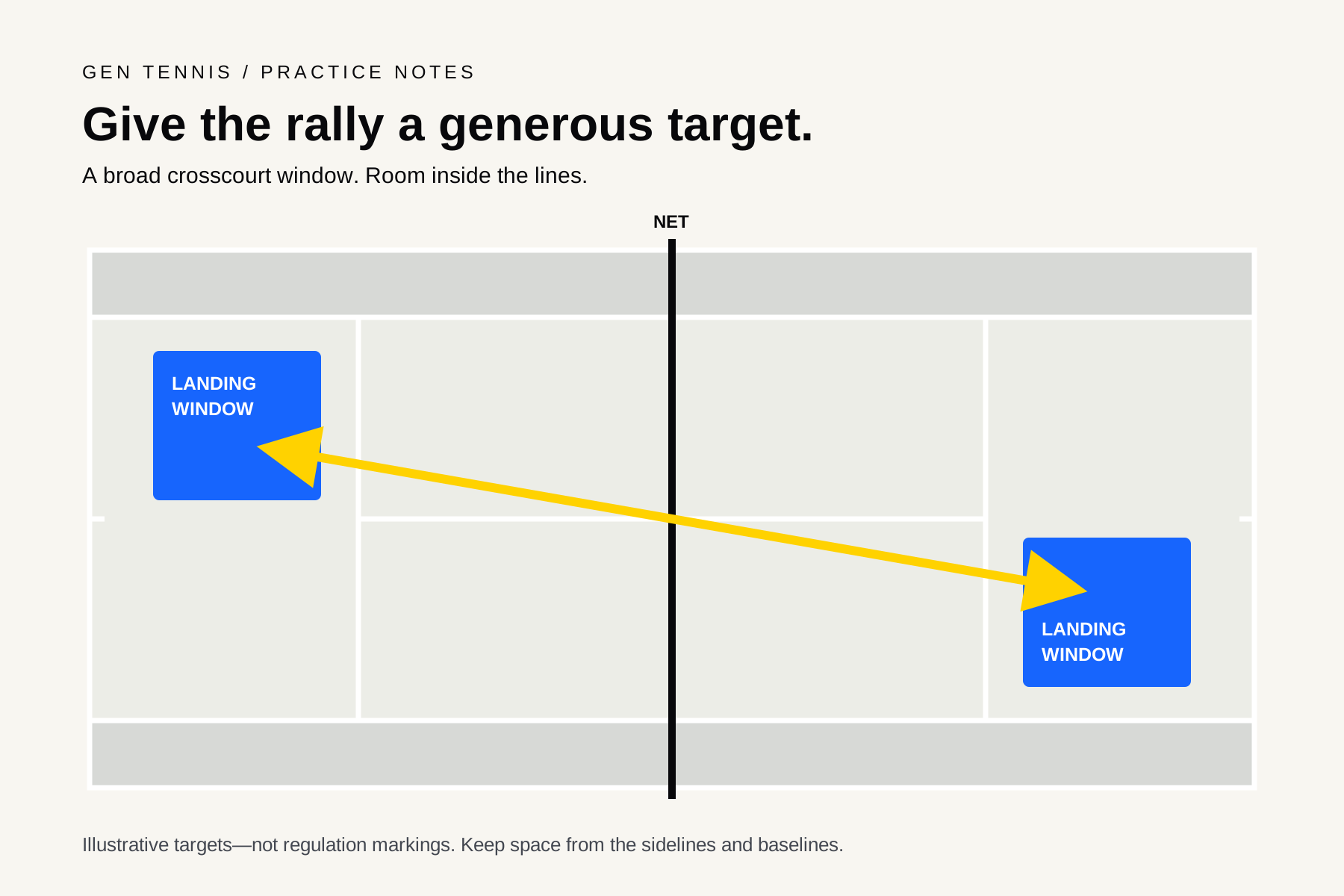
USTA's guidance on consistent groundstrokes recommends crosscourt hitting for its margin for error. For this exercise, use two broad landing windows diagonally opposite each other, comfortably inside the singles sidelines and baselines. The diagram shows the idea, not a target size everyone must achieve.
Start with enough height and controlled pace to reach the opposite window. Do not turn the window into a demand for baseline-hugging depth. USTA also uses shots landing behind the service line in a target-practice exercise; that can be a useful broad depth reference when both players can sustain it. If they cannot, simplify the task rather than repeatedly forcing a difficult ball.
You do not need cones scattered through the movement area. Agree on visible court references and keep loose balls clear. Crosscourt is the practice constraint here, not a rule that every match ball should be played diagonally.
Look at the miss—and the ball before it
After a broken rally, describe something observable before proposing a fix. Was the incoming ball unexpectedly deep? Did the player arrive late or get crowded? Was the attempted shot much faster than the previous ones? The final contact belongs to an exchange, not an isolated photograph.
These are GEN Tennis practice suggestions, not diagnoses. Use them to choose a small experiment; several different causes can produce the same miss.
- Repeatedly into the net: notice how low the shots travel. Try a little more net clearance at a manageable pace, rather than simply swinging harder. Check whether the ball was already below a comfortable contact height.
- Repeatedly long: keep the broad target but reduce pace slightly. Notice whether height or incoming depth also changed. Adding more height without adjusting anything else may not solve a depth problem.
- Repeatedly wide: move the intended landing area farther from the sideline. Check whether you were trying to redirect a difficult incoming ball instead of maintaining the agreed diagonal.
- Repeatedly cramped at contact: pay attention to spacing before the swing. USTA identifies getting too close to the ball as a common beginner issue. Give yourself room to adjust; do not infer a grip problem from one crowded shot.
Give the rally a fair start
Begin each attempt with a gentle drop-hit feed toward the agreed area. Replay a feed that is clearly too wide, deep or fast for the task. A desperate opening return makes it harder to tell whether your chosen adjustment helped.
Keep moving after contact. Watch the outgoing ball, recover toward a position from which the expected return is reachable and adjust to its actual bounce. A cooperative rally still includes reading and movement; it should not depend on both players standing still while the ball happens to find their rackets.
Try three rounds of six starts
Here is an original practice format, not an official scoring system or validated skill test. Play six rally starts with the same diagonal and comfortable pace. Exclude the feed from your count, then count each consecutive return that lands in the agreed window. End the count when the task breaks down and reset safely.
After six starts, identify the most common breakdown. Choose one adjustment: a wider margin from the sideline, slightly less pace or a more consistent feed. Play another six starts with that change, then repeat the setup for a third round. Alternate feeders between rounds.
Compare all six attempts, not just the longest rally. Six exchanges of four shots tell a different story from five immediate misses and one exchange of twenty. You are looking for a task you can reproduce, not a lucky personal record. If counting distracts you, have one player count or simply discuss whether the exchange felt more manageable.
Then make the problem a little less predictable
Once the controlled exchange is repeatable, change one demand: use the other diagonal, vary the incoming depth or begin a point after an agreed cooperative opening. These are different practice tasks. Expect the rally count to change when the task changes; do not treat that automatically as lost progress.
If the same difficulty persists across simpler conditions, bring a specific question to a coach: for example, why do deeper balls leave me crowded? That is more useful than announcing that your forehand is broken. Leave the court knowing what you tried, what changed and which question deserves the next session.
Our editorial standards · Questions or corrections? Contact the editor.
Sources
- USTA: Improve Your Game—Consistent Groundstrokes (June 28, 2018; checked September 19, 2026)
- USTA: Find Your Optimal Contact Point (March 27, 2018; checked September 19, 2026)
- USTA: Target Practice (March 25, 2021; checked September 19, 2026)
- ITF 2026 Rules of Tennis: Rule 1 court geometry; the target windows and three-round exercise are GEN Tennis suggestions