The situation comes before the shot
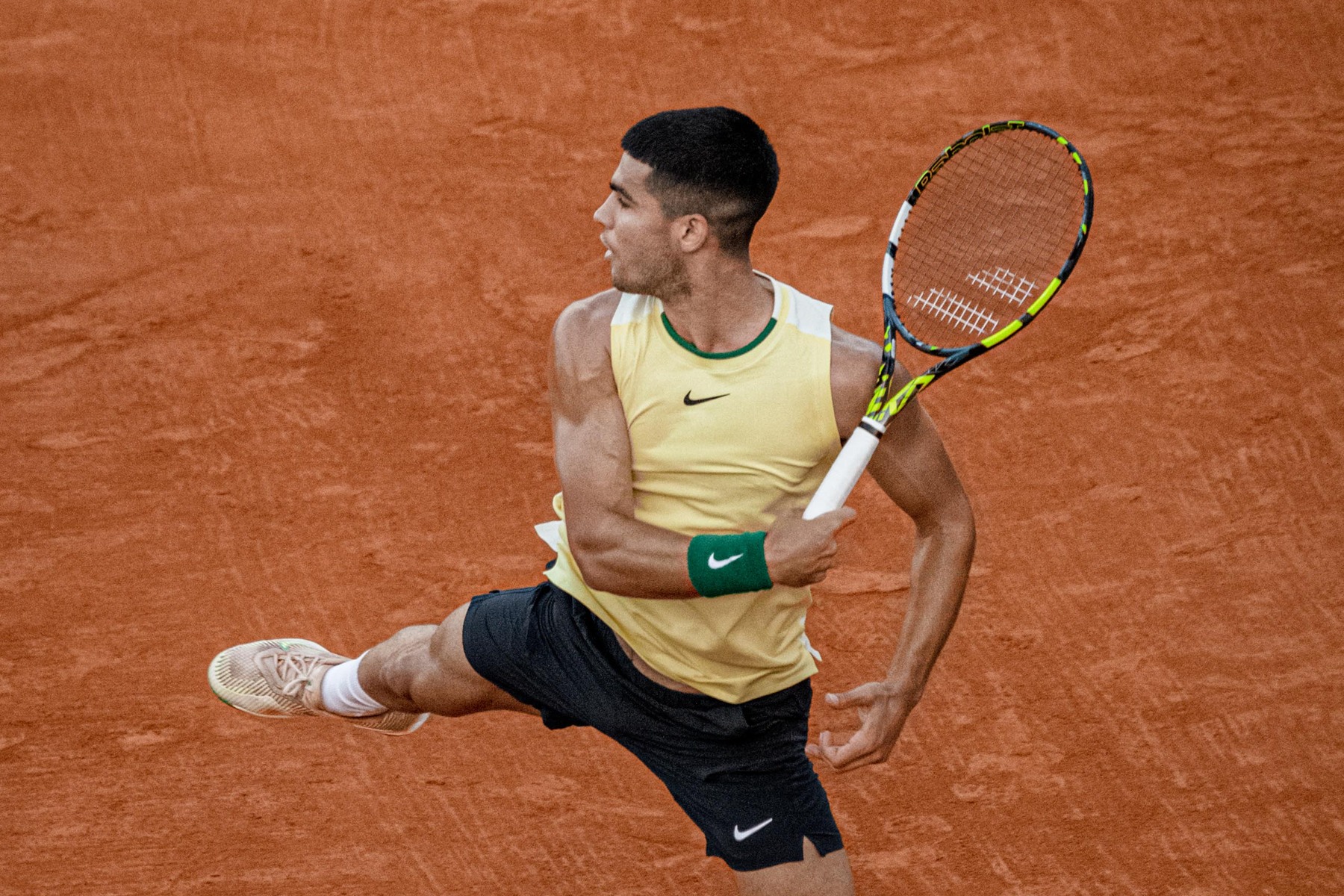
A drop shot is worth considering when your opponent has ground to cover, you can control the incoming ball, and you are ready for a reply. Carlos Alcaraz makes that choice unusually difficult to read because a powerful groundstroke remains a believable alternative. For a recreational player, the useful lesson begins with the situation before the shot.
Think of a familiar point. You have exchanged several comfortable balls, your opponent is waiting behind the baseline, and a shorter reply lets you move forward. Now a softly placed ball might ask them to change direction and cover the front of the court. Try the same shot while stretched behind your own baseline, and you face a very different problem, even if their position looks identical.
A drop shot is a deliberately short ball, usually played with backspin, intended to bring the opponent forward. Landing inside the service box is only part of the job. If it hangs in the air or bounces up comfortably, you may have invited your opponent to attack.
What Alcaraz’s opponents have noticed
In Roland-Garros’s reporting from May 2022, Daniil Medvedev described how Alcaraz’s heavy groundstrokes influence an opponent’s readiness. Cameron Norrie highlighted the difficulty of distinguishing his forehand drop shot from a much harder ball during preparation. Their accounts point to two connected problems for the receiver: where to wait and what to expect.
A later match offers a concrete example. In Turin on November 17, 2023, Alcaraz beat Medvedev 6–4, 6–4. The official ATP report describes his use of drop shots and serve-and-volley play against Medvedev’s deep court positioning. It also records other parts of the performance, including his forehand and return game. This was a combination of tactics, not proof that drop shots alone won the match.
For your own tennis, ask whether the opponent has a reason to respect your deeper shot. You do not need Alcaraz’s pace. A controlled ball that repeatedly makes your opponent play from farther back can create a useful contrast with a short one.
Look at their movement, not only their location
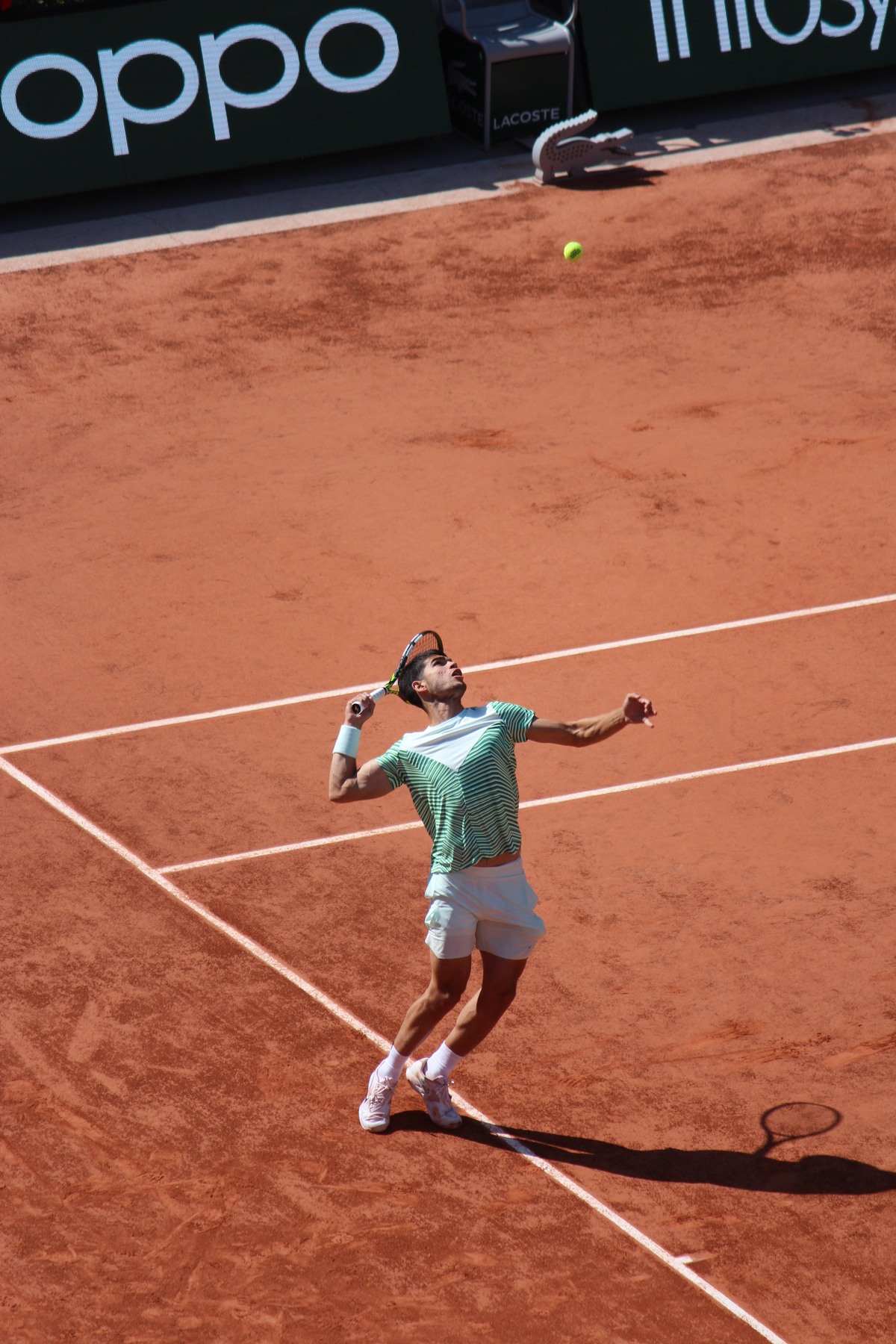
An opponent well behind the baseline may be a promising target. But a player already leaning forward and expecting the drop shot is different from one recovering backward after a deep ball.
Notice the point developing while maintaining attention to your contact. Where did your previous shot send them? Are they recovering toward the middle, retreating or stepping in? You do not need to stare across the net during the swing to gather that information.
Our coaching interpretation is to treat distance and movement as clues, not permission slips. A fast opponent can retrieve a good drop shot. An opponent near the baseline can still be wrong-footed. Neither observation makes the choice automatic.
Recovering deep
A controlled short ball can ask the opponent to change direction. Be ready for the reply.
Already moving forward
The same short target may now help the opponent. Keep a deeper option available.
Check whether you can play a controlled short ball
Your own contact can cancel an attractive opening. If the incoming ball is driving you backward, crowding your body or forcing a desperate reach, changing to a delicate shot adds another demand.
A more manageable situation is a ball you can reach with usable spacing and enough time to control the racket. Being inside the baseline reduces the distance your shot must travel, but a court line cannot tell you whether you are balanced or comfortable. Our guide to timing, spacing and rhythm explains that distinction.
Keep the technical aim understandable: control the flight and landing rather than manufacture an elaborate last-second trick. Trying to imitate Alcaraz’s disguise before you can place the ball reliably can turn preparation into hesitation. A coach who can see your contact can help with racket face and swing path; an attractive opening does not repair uncertain execution.
Choose between options you can actually execute
Consider these situations as coaching examples, not fixed rules:
- You are balanced on a manageable ball; the opponent is recovering deep.
- Consider the drop shot, while keeping a controlled deeper ball available.
- The opponent has started moving forward in anticipation.
- Reconsider the short target. Playing deeper may make better use of the space they are leaving.
- You are stretched, late or retreating.
- Prioritize a reply you can control rather than forcing a delicate change.
- You have a short ball but little confidence in the drop shot.
- Use a familiar placement or approach. You do not owe the point a spectacular finish.
The same principle applies when deciding whether to go down the line: an empty area matters only if you can send a useful ball there.
Expect the ball to come back
A drop shot does not have to finish the point to be useful. It may bring the opponent to a low, stretched contact. But you still need to respond to what they produce.
After striking, watch your ball and their approach. Move into a position that helps you cover the likely reply, then organize around their contact. Avoid admiring the shot from the baseline or charging so close that a simple lob catches you out. The appropriate position changes with your shot’s quality and the opponent’s options.
In FLOW’s Read → Move → Organize → Strike → Recover sequence, the drop shot makes that final connection especially clear. Your decision includes the next ball. FLOW is our way of organizing the learning task; it is not a claim about Alcaraz’s coaching system.
Practice choosing, as well as hitting
Try this with a partner after an easy warm-up. Begin with manageable rally balls and generous targets. If placing a short ball is unfamiliar, briefly work from a predictable feed first. Keep loose balls out of the movement area.
Then play a short block of points in which both a deeper shot and a drop shot are available. Your partner can remain back or recover forward as the exchange develops. Do not make the fifth ball a compulsory drop shot: that rehearses a sequence without requiring the choice this article is about.
Between points, discuss three observations: whether the incoming ball allowed controlled contact, where the opponent was moving, and what reply followed. A missed shot can come from a reasonable choice; a winner can come from a poor one. Look for a pattern across the block.
Use the Practice Planner to organize the time around your court and partner setup. Select rally consistency, then bring this decision task into the session; the tool does not generate a drop-shot-specific plan.
On your next court visit, look for one situation in which the shorter ball makes sense. Keep the deeper option available, choose from the ball you receive, and stay involved after contact.
Our editorial standards · Questions or corrections? Contact the editor.
Sources
Keep reading.
Ben Shelton’s college-to-pro route was built on readiness, not a timetable
Laver Cup 2026: Europe wins in London, and a young tradition grows