The major final makes the earlier choices easier to see
Ben Shelton reached his first major singles final at the 2026 US Open, losing to Alexander Zverev in four sets on September 13. That result makes his rise look fast: college champion in 2022, a full-time professional later that summer, Top 10 in 2025 and a Grand Slam finalist the following year.
The useful answer is not that college tennis is a shortcut to a major final. Shelton’s route matters because Florida gave him a demanding place to develop before the professional tour was the right full-time environment. He did not stay for a predetermined number of years, and he did not leave simply because one result created attention. Each stage supplied evidence for the next decision.
That distinction matters for young players and families. A successful player’s chronology describes what happened. It does not prescribe the age, school, coach or timetable another player should copy.
He entered a team before he became its No. 1
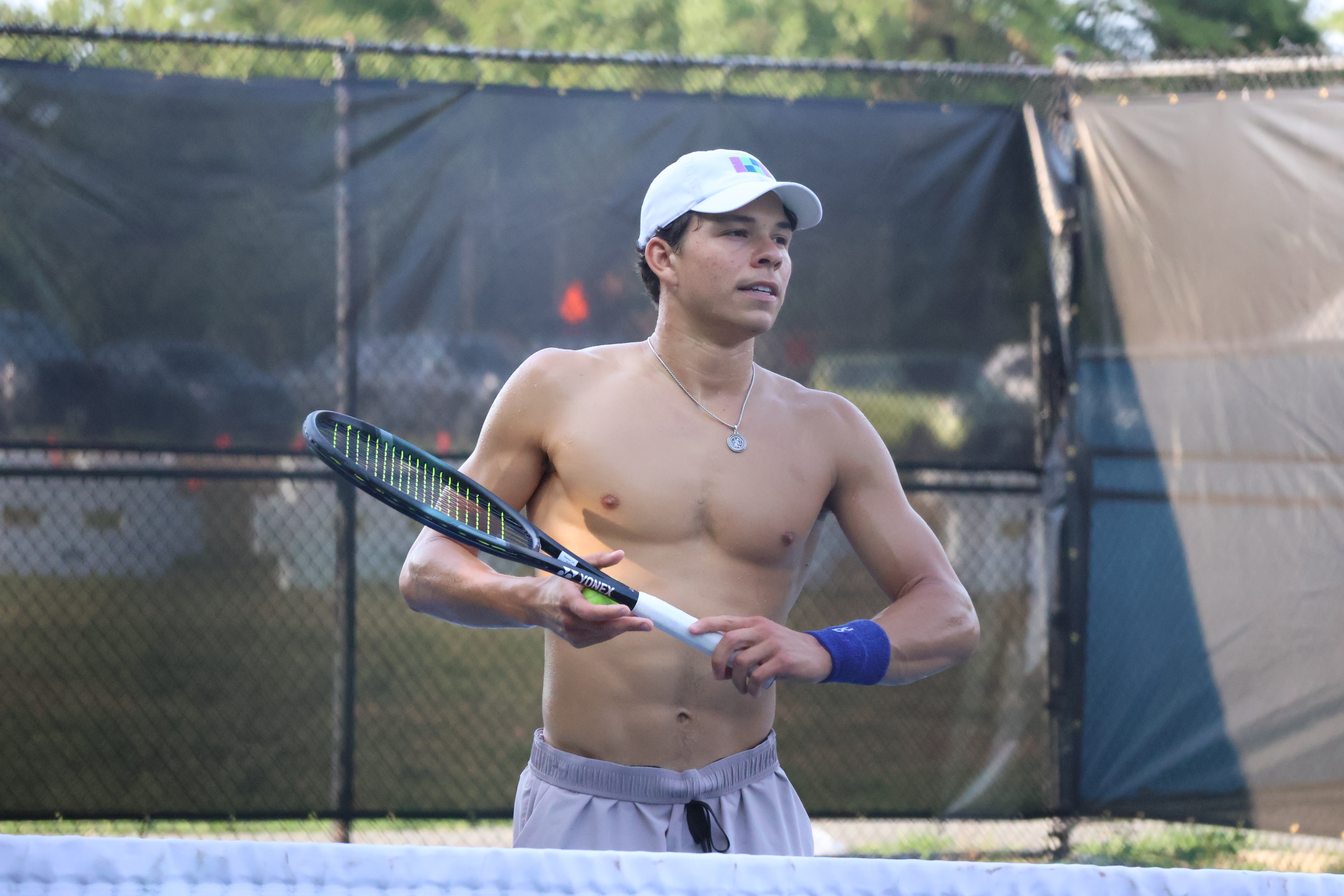
Shelton arrived at the University of Florida after finishing high school a year early. As a freshman in 2020–21, he played most of his dual singles matches at the fifth position rather than being installed immediately as the program’s star. Florida’s official record lists him at 18–4 on court five and 28–5 overall in singles.
The season still ended with a central moment. Shelton clinched Florida’s 4–1 victory over Baylor for the program’s first NCAA men’s team championship. His role had grown inside a lineup where every court contributed to the same result. That is different from a junior schedule built almost entirely around an individual ranking.
This is one reason the route should not be reduced to the fact that his father, Bryan Shelton, coached the team. Family knowledge and access were real advantages, but the college environment also included teammates, other coaches, dual-match pressure, academic work and a place in the lineup that had to change through performance.
The second season changed the scale of the evidence
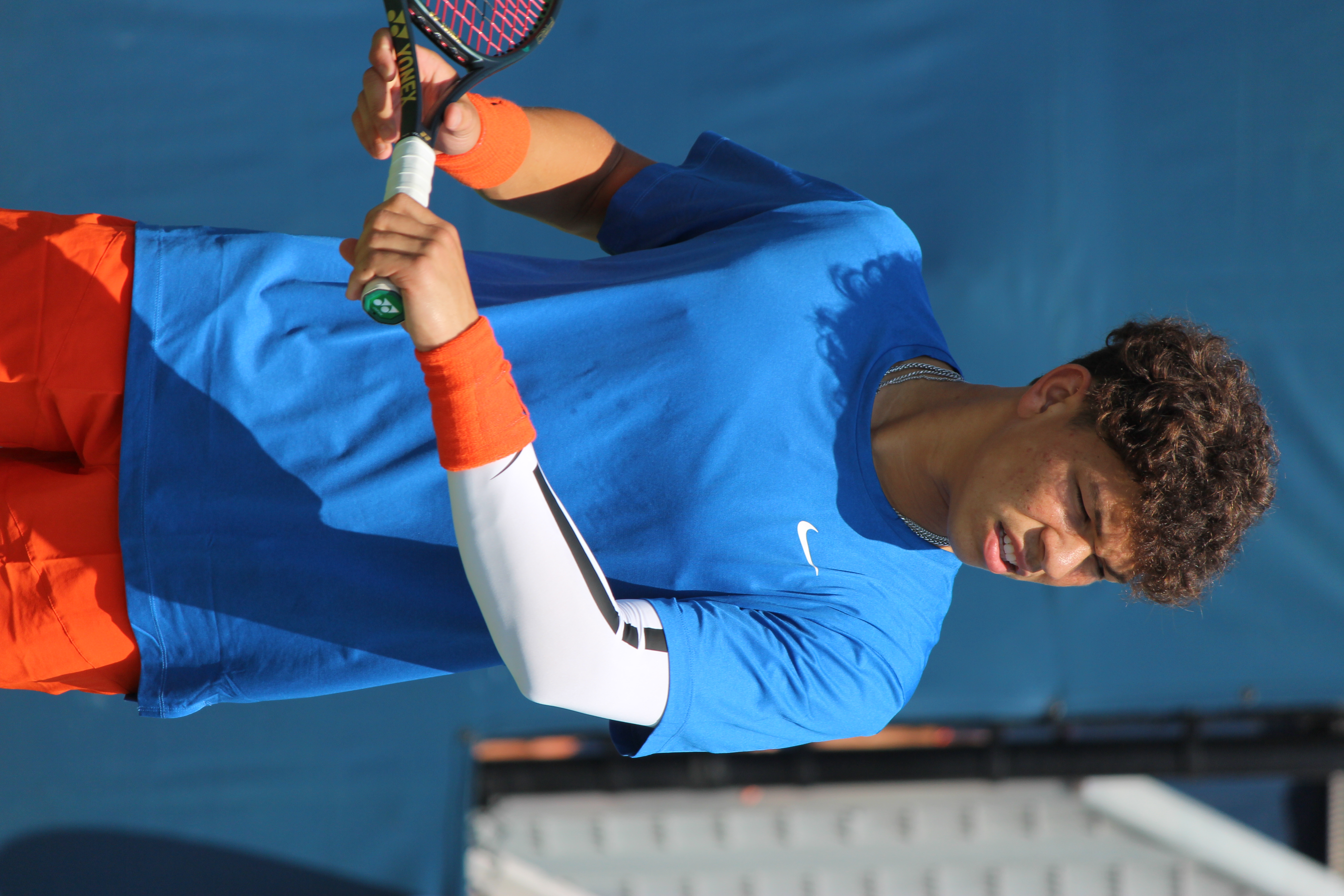
As a sophomore, Shelton moved to the top of Florida’s lineup. The school’s records list a 37–5 singles season, a No. 1 year-end collegiate ranking and the 2022 NCAA singles championship. He beat August Holmgren 4–6, 6–3, 6–2 in the final after defeating ranked opponents throughout the draw.
Those accomplishments did not prove that he would thrive on the ATP Tour. College tennis and the professional circuit ask different questions: travel changes, opponents are older and more varied, the player manages entries and prize money, and a team schedule gives way to individual planning. But the second season did show that the original environment had produced substantial growth and that the next test could become more demanding.
The change from lower in the lineup to NCAA singles champion is the most revealing part of the profile. Florida was not simply a credential Shelton collected before turning pro. It was the place where his competitive role expanded.
He used professional matches as a decision test
Shelton played professional events as an amateur during college. In the summer of 2022, Florida reported that he rose from No. 547 to No. 171 in the ATP rankings. At Cincinnati he beat world No. 56 Lorenzo Sonego and then No. 5 Casper Ruud. The result against Ruud was dramatic, but Shelton told Florida that his decision was based on where he was as a player and person, not on one result.
On August 23, 2022, he announced that he would give up his remaining college eligibility and turn professional. He also planned to continue his finance degree online. That choice closed one option while preserving part of the education he had begun.
This is a useful decision pattern: test the next level while the current environment still exists, compare the evidence with the player’s broader goals, and be honest about what will be lost as well as gained. Shelton left a team he valued. He was not escaping a failed college experience.
Enters the college team after finishing high school early.
Mostly court five; clinches Florida’s first NCAA men’s team title.
Moves to No. 1, wins the NCAA singles title and turns professional in August.
Reaches the ATP Top 10 in his third full professional season.
Reaches his first Grand Slam singles final at the US Open.
The college environment did not follow him automatically
Professional success arrived quickly, but the support structure still had to change. Bryan Shelton remained Florida’s head coach during Ben’s first months on tour. In June 2023, after stepping down from the university job, he became his son’s full-time coach. ATP coverage from that period makes the sequence clear: the college team, the early professional transition and the later father-son touring partnership were related stages, not one unchanged arrangement.
Shelton also continued to acknowledge the teammates and coaches who shaped him at Florida. The team identity was part of his development, but the tour required a new daily system. A college program can supply practice partners, conditioning, coaching, competition and academic structure. A professional player has to rebuild or purchase many of those functions while managing travel and results.
By June 2025, Shelton had entered the ATP Top 10. His 2026 US Open run then included a five-set quarterfinal win over Carlos Alcaraz before the final against Zverev. Those later results confirm that the transition worked for him. They do not tell us which route would have worked for a different player.
What the route shows—and what it does not
Shelton’s story shows that a player can use college as a serious performance environment and still enter the professional game young. It also shows why the decision should be revisited when the evidence changes. The most useful unit is not “two years of college.” It is a sequence of environments, tests and decisions.
It does not show that college is necessary, that playing for a parent is preferable, or that an NCAA title predicts a major final. It does not erase Shelton’s unusual athletic ability, family tennis knowledge, coaching access or the resources surrounding an elite U.S. program. A pathway decision has to account for the actual player and actual options available now.
- Is the current environment still producing visible learning and stronger competition?
- Can the player test the next level without pretending one result settles the decision?
- Who will replace the coaching, practice, physical support, education and community the player is leaving?
- Which options remain open, and which ones close when the decision is made?
A pathway is a series of earned decisions
For a junior family, the practical lesson is to define the job of the present environment. A school or academy should not be defended only because it was once the plan. A professional opportunity should not be accepted only because it sounds advanced. Name what the player is learning, what evidence would justify a change and what support the next stage requires.
Shelton’s route is compelling because it contains clear transitions: a freshman role, a championship role, a professional test and a deliberate departure. The 2026 US Open final is the latest result, not proof that every earlier choice was universally correct. His chronology is most useful when it prompts better questions about readiness—not when it becomes somebody else’s timetable.
Our editorial standards · Questions or corrections? Contact the editor.
Sources
- Florida Gators: Ben Shelton collegiate record and honors (checked October 3, 2026)
- Florida Gators: Ben Shelton Turning Pro (August 23, 2022)
- ATP Tour: Bryan Shelton becomes Ben Shelton’s full-time coach (June 2023)
- ATP Tour: Ben Shelton’s Florida roots in his first full professional season (October 2023)
- USTA: Shelton enters the ATP Top 10 (June 16, 2025)
- US Open: Shelton defeats Alcaraz in the 2026 quarterfinals (September 9, 2026)
- US Open: Zverev defeats Shelton in the 2026 final (September 13, 2026)
Keep reading.
Who gets a place in college tennis? The international-player debate, explained