A first breakthrough is worth examining
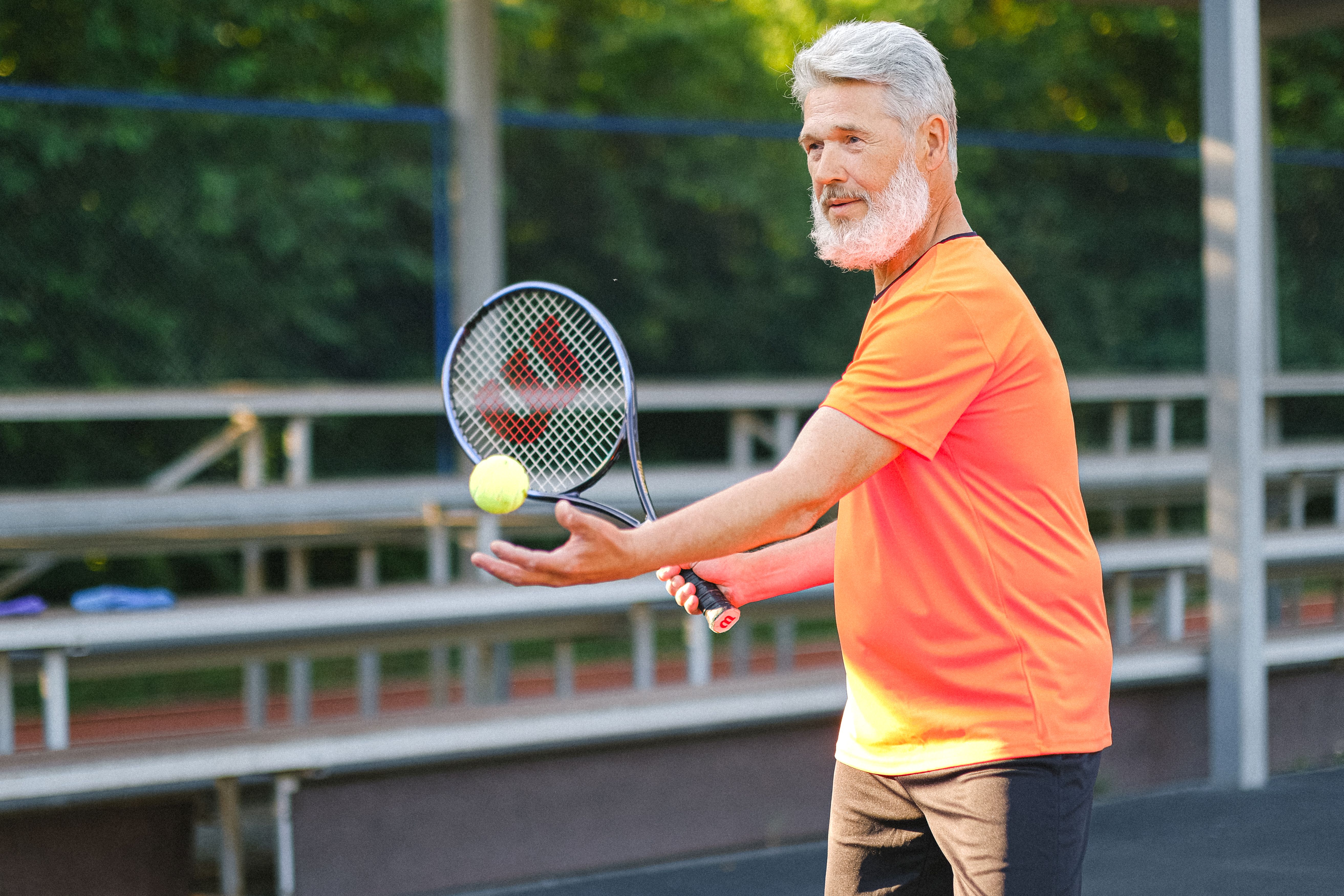
A beginner can make encouraging progress in a short tennis lesson. That does not establish that a single attention cue can produce dependable strokes in 20 minutes. Gallwey’s bounce–hit exercise remains a reasonable option to try: say ‘bounce’ as the ball lands and ‘hit’ at contact. Its value should be judged by what it helps this player do, including when the feed changes and the player returns another day.
Imagine someone who keeps moving too close to the ball. They might call the bounce perfectly and still have no room to swing. Another player might already move comfortably but interrupt each attempt with self-criticism. The same words are unlikely to answer both problems completely. This is where the famous Inner Game story becomes useful for coaches.
What Gallwey brought to coaching
W. Timothy Gallwey published The Inner Game of Tennis in 1974. A 50th-anniversary edition followed in June 2024. The book asks how instruction, anxiety and judgment affect our ability to learn and perform. Its influence later extended into workplace coaching; it began with close attention to what happened on a tennis court.
Gallwey called the judging, instructing inner voice Self 1 and the capacity that acts and learns Self 2. These are elements of his coaching model, not established anatomical divisions of the brain. His practical proposition was that quieter, less judgmental observation could make room for learning. That proposition deserves a more careful reading than the suggestion that a complete tennis game is already inside every novice.
The lesson behind the Instagram post
This article was prompted by a reader-shared post from The Genius Series (@the.genius.series), featuring Tim Gallwey and The Inner Game. The account is credited for the story’s presentation; the research and coaching interpretation here are GEN Tennis’s independent analysis.
The post describes Molly, an inexperienced adult, learning forehand, backhand and serve in 20 minutes after Gallwey directs her attention to bounce and contact. His official website identifies a Molly demonstration for a 1970s Harry Reasoner program. We could not independently authenticate the caption’s exact 1975 date, its claim of live broadcasting or an uninterrupted recording of the entire lesson.
Gallwey’s retrospective account in The Inner Game of Stress describes a richer progression. He begins with observation, invites hitting when comfortable, changes attention to the sound of contact and increases the difficulty of his feeds. For the serve, he demonstrates several examples, supplies a rhythm and asks Molly to imagine herself serving before trying.
That account also claims exceptional improvement. It is the coach’s account, rather than an independently controlled test. Crucially, it describes demonstration and carefully adjusted practice alongside the attention exercise. A lesson can communicate considerable technical information without a long explanation of joint positions.
What does ‘she learned it’ mean?
Making contact, returning a cooperative feed and sustaining an exchange are meaningful first achievements. They do not tell us everything about direction control, movement to an unfamiliar ball or an independently started point. Nor does a successful attempt tell us how reliably it will recur.
To evaluate a learning claim, separate performance during practice from retention after a break and transfer to changed conditions. Molly’s reported lesson cannot isolate the effect of the words from the feeding, demonstration, reassurance and repetitions. It also does not provide a delayed comparison with another teaching approach. That limits the conclusion; it does not require us to dismiss her experience.
LOOK BEYOND THE FIRST RALLY
During the lesson
Does contact improve with this feed and this cue?
PerformanceAfter a break
What can the player repeat before the reminder?
RetentionWhen the ball changes
Can the player adjust to different depth or pace?
Transfer
Research supports a question, not a universal answer
Research on attention often compares an external focus, such as racket movement or an intended ball outcome, with an internal focus on body movements. That is related to Gallwey’s work, but it is not the same as testing his exact bounce–hit exercise or his whole teaching model.
In a 2014 experiment, 45 children practiced forehands. The racket-focus group performed better than the arm-focus and control groups on a retention test two days later. On transfer, its advantage over the control group was not statistically significant. Every child received a demonstration and grip instruction, and practiced with a smaller court and lower-compression balls.
A 2023 study of 60 children found benefits from externally directed instruction after an eight-week tennis program. The children had already received two months of training. Grip, preparation, footwork, contact and finishing were explicitly taught. External focus did not outperform internal focus on the transfer measure. These were comparisons within structured coaching, not demonstrations that instruction was unnecessary.
The broader evidence is disputed. Chua and colleagues’ 2021 meta-analysis favored external focus. McKay and colleagues’ 2024 reanalysis found publication bias and much smaller average effects after correction, challenging a blanket superiority claim. A further reanalysis published September 28, 2026 emphasized variation within the evidence. The responsible conclusion is to choose and evaluate cues in context, without treating either an encouraging study or a critical reanalysis as the final verdict on every learner.
Movement still needs to be learned
Reading the ball, creating space and coordinating the stroke remain physical tasks. In FLOW Tennis, attention belongs within the connected process of Read, Move, Organize, Strike and Recover. Recognizing a bounce can inform movement; it cannot by itself establish where a player should stand or how they should adapt to a higher ball.
Understanding and execution are different, too. A beginner need not name each link in the kinetic chain before developing coordination. A demonstration, a comfortable rehearsal and an appropriate feed can give the player something useful to reproduce. The coach still observes what actually happens and adjusts the task.
We should also be precise about ‘not using the arm.’ Shoulder and arm actions contribute substantially to racket speed. The useful objective is coordination with the rest of the body, rather than eliminating the arm’s role or asking a novice to consciously operate every joint during the swing.
Try the cue, then check what it changed
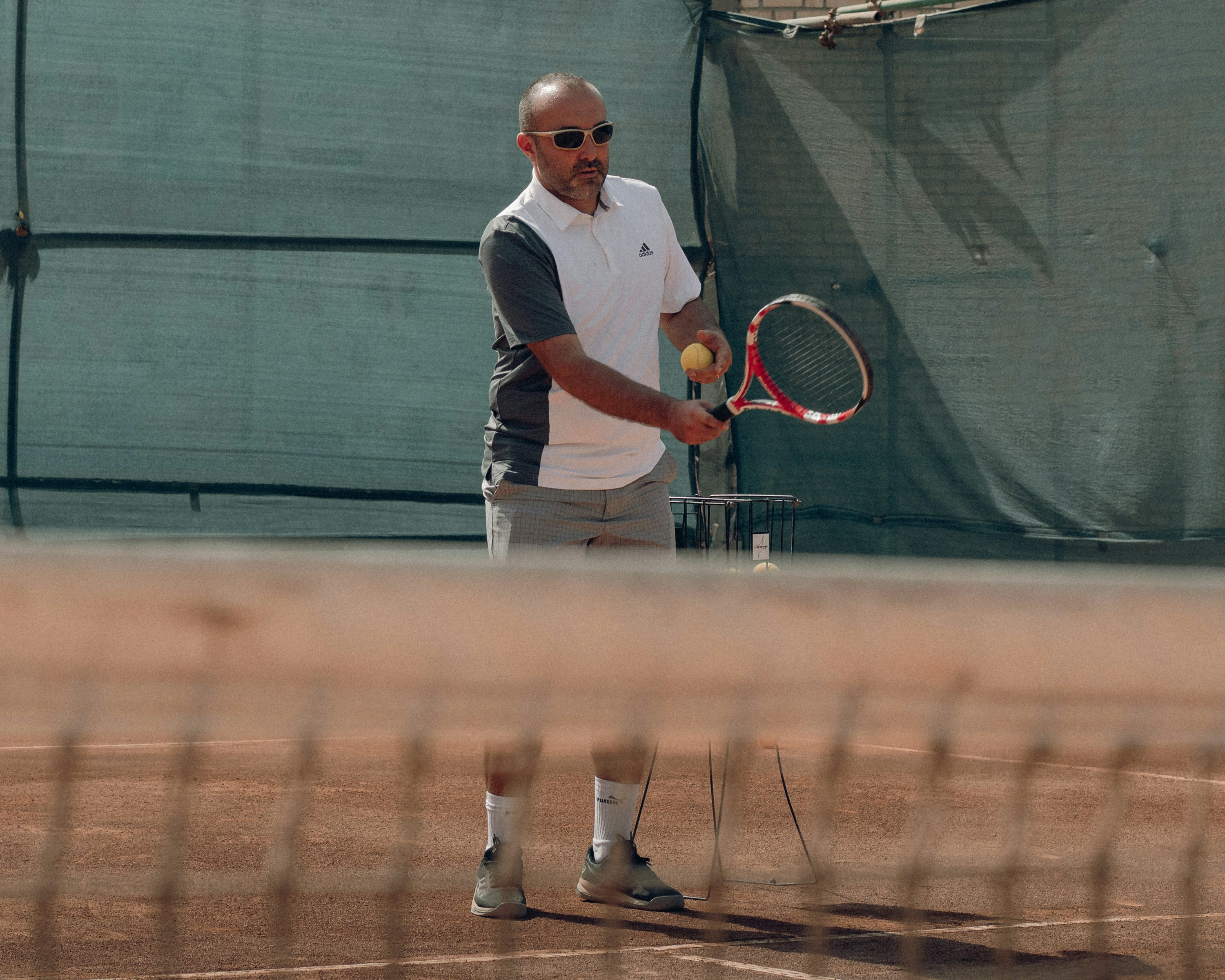
For a practical coaching experiment, begin with an easy feed and enough court space to move comfortably. Demonstrate the task and clarify the intended contact and target. Try a short set of attempts with bounce–hit. Observe whether the player tracks the events accurately, creates room for the racket and sends the ball toward the agreed area.
If speaking adds distraction, simplify or remove the cue. If the player remains crowded, work on spacing instead of asking for louder or more accurate counting. Change one feed condition, such as depth, and see whether the movement adapts. At the next session, repeat the original task before offering the same reminder.
Record the conditions and the movement alongside the number of successful balls. This is an informal way to choose the next coaching step, not a controlled experiment or a test of talent. A cue earns its place when it helps the learner solve the actual problem. The useful question after a striking first lesson is what the player can carry into the next one.
Our editorial standards · Questions or corrections? Contact the editor.
Sources
- The Genius Series (@the.genius.series): source account for the reader-supplied Instagram screenshot; original post date and permalink unverified
- Penguin Random House: The Inner Game of Tennis, author information and publication history
- The Inner Game: official Molly demonstration page
- Gallwey: Molly account in The Inner Game of Stress; Romanian translated excerpt by Magda Bunea, published by LiterNet, March 23, 2016
- Hadler et al. (2014): children’s forehand learning, methods and retention/transfer results
- Tapan, Şahan and Erman (2023): attention and tennis skill acquisition in children
- Chua et al. (2021): external versus internal focus meta-analyses
- McKay et al. (2024): publication-bias reanalysis of attentional-focus research
- Zeng, Zhang and Wang (September 28, 2026): variation within attentional-focus evidence
- Elliott, Takahashi and Noffal (1997): upper-limb contributions to forehand racket velocity
Keep reading.
Timing, spacing and rhythm in tennis: move into the shot, not into the ball