Use four lines, not a verdict
After tennis practice, write down four things: the task you attempted, the conditions in which you attempted it, one piece of observable evidence and the next adjustment you will try. That is enough to make the note useful. It can take two minutes, and it should leave the next session with a starting point.
A line such as “forehand was terrible” records frustration but does not preserve the problem. Was the task a cooperative crosscourt rally or a competitive point? Were you receiving a predictable feed or reacting to a partner? Did the ball repeatedly finish in the net, arrive late, or miss in several unrelated ways? The word “terrible” cannot answer any of those questions.
1. Name the task precisely
Begin with what you were actually trying to do. “Worked on forehands” is too broad. “Ten cooperative forehands crosscourt from a partner feed, aiming through a broad window inside the singles court” identifies the stroke, direction, start and intended outcome. If the task changed halfway through, record the version that produced the evidence you want to keep.
This level of detail is normal in useful tennis instruction. USTA's target-practice example divides a 20-minute session into named five-minute segments and gives the shots a depth objective. Its serve guide tells players to choose an intended location and spin rather than simply hitting and hoping. Those official examples do not validate our note format; they show why the task needs enough definition to be repeatable.
2. Preserve the conditions that changed the task
A result without context is easy to misread. Record only the conditions that matter: who or what started the ball, the approximate pace, the target, the court area and the ball type if it was unusual. “Partner fed from the service line at a cooperative pace” describes a different problem from “live rally from the baseline.” If you shortened the court or used a slower ball, include that too.
You do not need a laboratory report. Weather, string tension and every feeling during the hour do not automatically belong in the note. Add a condition when it would help you recreate the task or explain why two attempts should not be compared directly. A concise record is more likely to be read again.
3. Record evidence you could have seen
Evidence describes what happened before it explains why. Useful entries include “seven of ten reached the broad target,” “three consecutive misses finished in the net,” or “contact felt crowded when the feed arrived closer to my body.” A count can clarify a pattern, but only beside the task and conditions that produced it. Seven of ten cooperative feeds and seven of ten first serves under score pressure are not interchangeable results.
Separate an observation from a diagnosis. “Contact was behind me on the three late misses” may be visible on video or confirmed by a coach. “My racket is too heavy” is a possible explanation that requires more evidence. Write it as a question if you are unsure: “Ask coach whether preparation was late or spacing caused the crowded contact.” The USTA's beginner contact-point guidance identifies getting too close to the ball as one common challenge, not the explanation for every miss.
4. Choose one next adjustment
End with one decision: repeat, simplify, progress or ask. Repeat the same task when the evidence is unclear. Simplify it by reducing pace, shortening the distance or enlarging the target when the exchange keeps collapsing. Progress one condition when the task has become repeatable. Ask a coach when the pattern needs direct observation rather than another guess.
Avoid writing a repair list for five body parts. If you change the grip, backswing, stance, target and pace together, the next round cannot tell you which change mattered. One adjustment does not promise improvement; it creates a cleaner comparison.
A complete note can fit on one screen
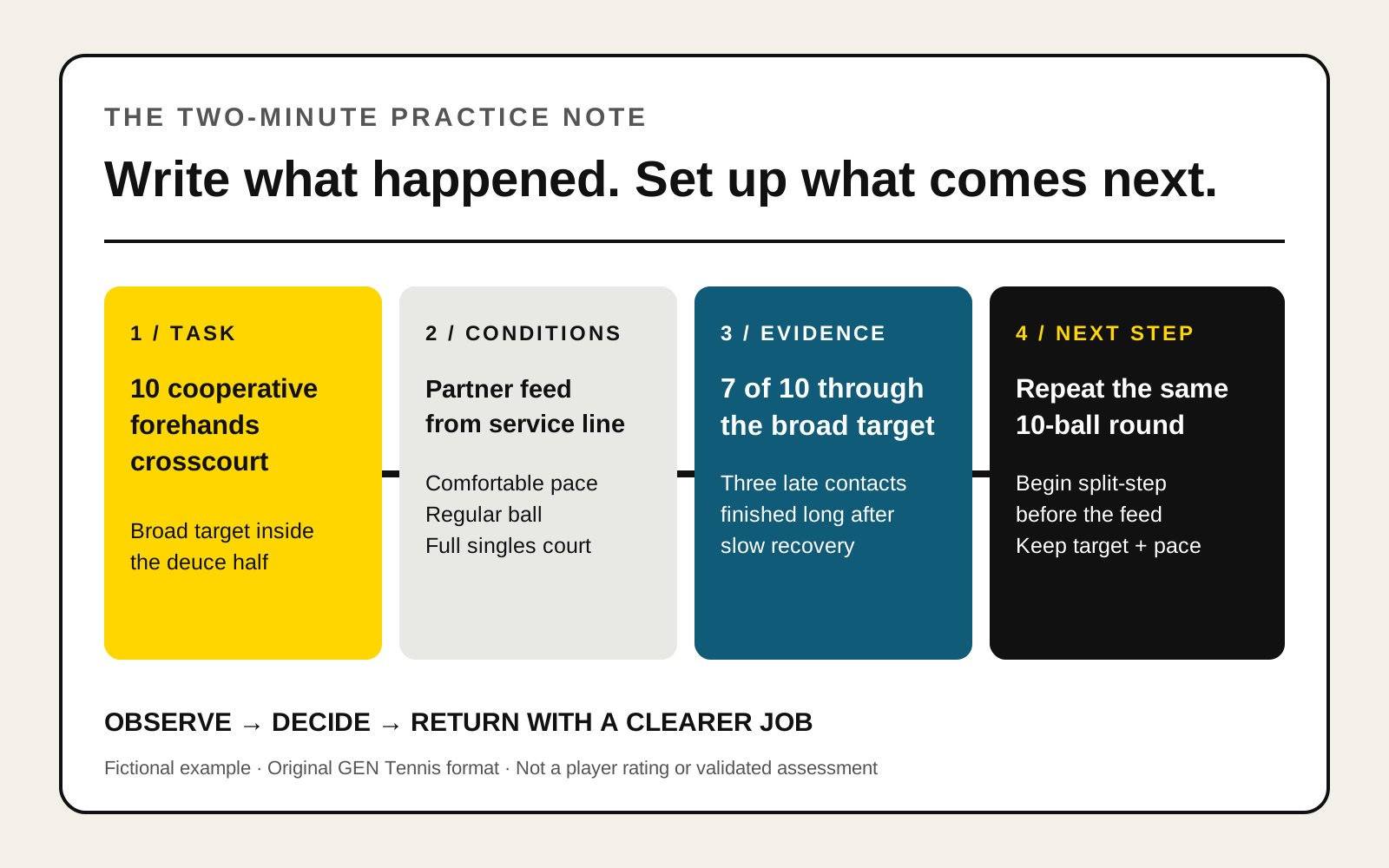
Here is a fictional entry using the four fields. The numbers are examples, not standards for your level.
- Task: Ten cooperative forehands crosscourt, aiming through a broad target inside the deuce half.
- Conditions: Partner feed from the opposite service line, comfortable pace, regular ball, full singles court.
- Evidence: Seven balls traveled through the target. Three late contacts finished long; the misses came when recovery to ready position was slow.
- Next step: Repeat the same ten-ball round and begin the split-step before the partner sends the feed. Keep the target and pace unchanged.
Review patterns weekly, not your worth
After several sessions, look for repeated tasks and repeated endings. Perhaps deep crosscourt rallies remain manageable until pace rises, or the second serve changes when a returner is present. That pattern can help you choose the next practice or frame a better question for a coach. It does not produce a player rating, forecast a match result or prove a technical cause.
Keep the record about your own work. Do not name or evaluate a practice partner without permission, and do not upload video of another person—especially a child—without appropriate consent. If pain, illness or injury appears in your notes, use the record to describe what happened to an appropriate health professional; a practice log cannot diagnose the problem.
The two-minute version
Before leaving the court, open a notes app or use one page of a notebook. Write four labels—Task, Conditions, Evidence, Next—and complete one line under each. Link a video only when it has been recorded and stored appropriately. Then use the final line to set up your next session in the practice planner.
The habit is intentionally small. You are not trying to narrate the entire hour or reward yourself for sounding analytical. You are preserving enough information to return with a clearer job.
Our editorial standards · Questions or corrections? Contact the editor.
Sources
- USTA Tips and Instruction: official library emphasizes beginning with a plan and a technical focus (checked September 21, 2026)
- USTA Target Practice: a 20-minute depth exercise divided into named five-minute tasks (March 25, 2021)
- USTA Tennis 101: Perfecting the Serve: choose an intended location and spin (January 1, 2017)
- USTA Find Your Optimal Contact Point: one official activity for a common spacing challenge (March 27, 2018)