The approach shot is the start of the transition
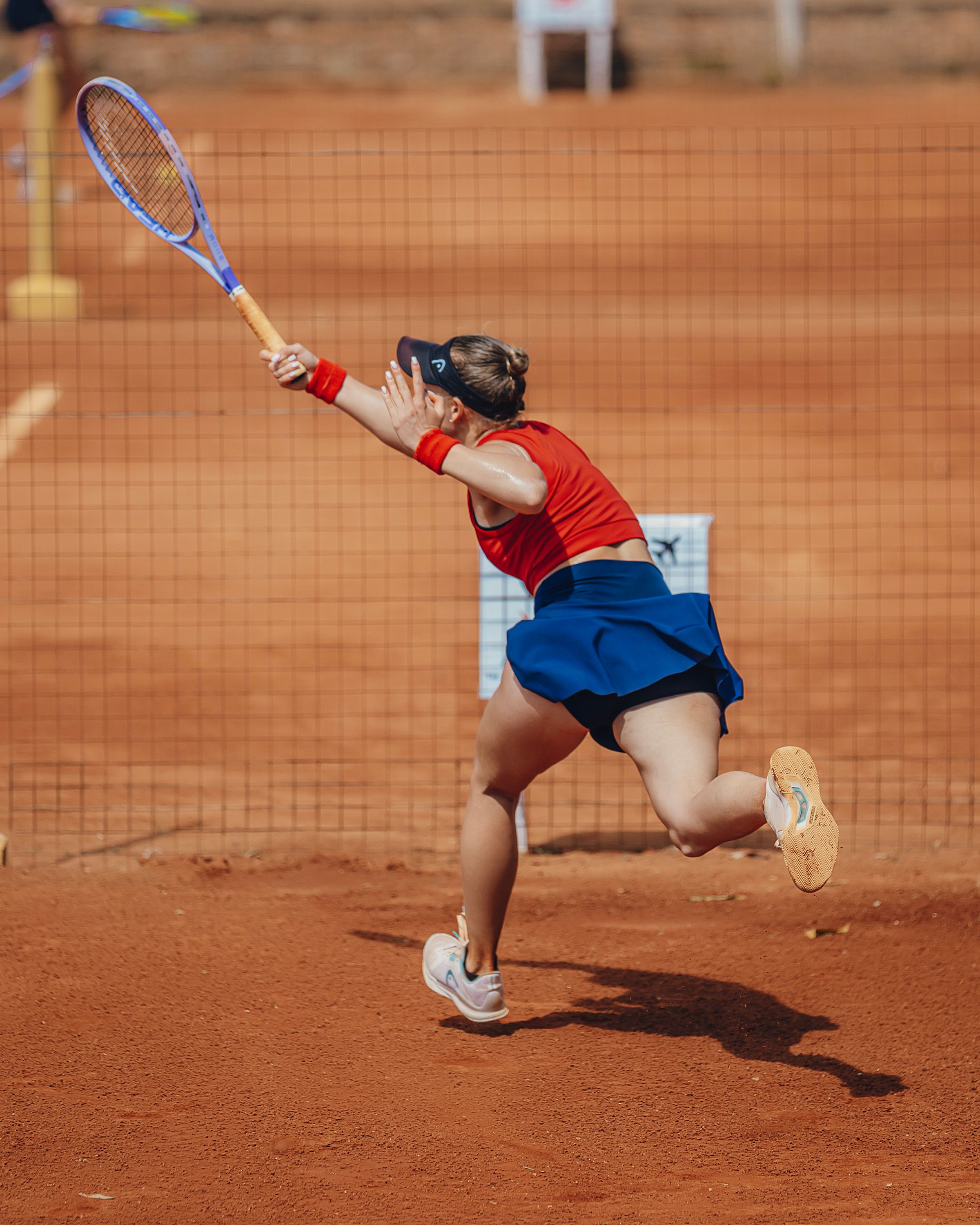
A recreational player sees a ball land short, sprints forward and tries to finish the point with one hard groundstroke. The ball comes back. The player is still running, the racket is down and the first volley arrives at the feet. What looked like a volley problem began earlier: the player treated moving forward as one dash instead of a sequence of contacts.
Go forward when the incoming ball gives you enough time and space to organize a useful approach. A shorter ball can be that invitation, but short does not automatically mean attack. A low ball below net height, a ball pulling you wide or a ball you reach late may call for controlled placement, a lower target or even a reset rather than an all-out charge.
The ITF defines an approach shot simply as a shot played while moving toward the net. That leaves room for different spins, targets and footwork. The common job is to improve the next situation: make the opponent hit while moving, from farther back or through a smaller opening—and arrive ready to respond if they do.
Organize the approach before you accelerate again
Move early enough to create contact space, then let the last adjustment steps organize the strike. Running fast is useful before the ball; running through the contact can make the racket solve a spacing problem the feet did not finish. You may still carry momentum forward, but the contact needs a base and a direction you can control.
Choose the target from the ball and the opponent, not from a rule. Down the line often makes sense because it can shorten your recovery path and reduce the opponent’s available crosscourt angle. Crosscourt can still be the better approach when the ball pulls you there, the opponent has over-recovered or the target gives you a clearly stronger reply. USTA’s singles guidance likewise frames net approaches through geometry, court position and the situation—not one automatic direction.
Use a target comfortably inside the sideline and baseline. The approach does not need to be a winner. A deep, controlled ball that makes the opponent contact while moving or from behind the baseline can give you time to keep advancing and can make the first volley more manageable.
Keep advancing, but do not outrun the read
After the approach, continue toward a position that improves your volley while watching the opponent. Stopping immediately after contact leaves too much court. Sprinting blindly to the net can leave you moving through the opponent’s strike with no time to react. The useful middle is forward progress that can be organized around the next read.
Your position will change with the quality of the approach. A deep ball that stretches the opponent may let you close farther. A comfortable approach that sits up may require an earlier split because the reply comes sooner and with more options. Do not use the service line as a finish line. It is a court marking, not a timing signal.
Time the split to the opponent, not the service line
Use the opponent’s contact as the event around which you organize the split step. You are not trying to freeze at the exact instant the strings meet the ball. The coaching aim is to arrive in a balanced, responsive landing as the reply becomes readable, then move toward it. In a USTA orange-ball practice plan, the cue is explicit: split step when the returner makes contact.
Research supports the split step as a preparatory movement, but it does not prescribe one universal hop or landing spot. A small study of nine skilled male players found faster movement onset in a simulated light-response task with a split step than without one. A tournament-video study of seven male professionals and 21 juniors found that speed, deceleration and acceleration around the split varied across stroke situations, including movement at the net. Those findings support situation-specific preparation; they do not prove that every player should copy the same height, rhythm or court position.
If the opponent contacts before you expected, organize sooner rather than forcing another stride. If a floating reply buys time, keep closing after the read. The sequence is continuous, but it still includes braking, reorientation and acceleration in response to the ball.
Give the first volley a realistic job
The first volley often arrives while you are still in transition, not parked beside the net. Its first job may be to keep the advantage: meet the ball in front, use a compact action and send it deep enough or wide enough that the opponent cannot immediately pass. USTA’s introductory volley guidance emphasizes control to different areas rather than one oversized swing.
A low volley usually needs height and depth before ambition. A ball above net height with the opponent out of position can invite a firmer angle or open-court target. A fast ball at the body may require a short block and quick recovery. The label ‘first volley’ describes when the shot occurs; it does not choose the finish for you.
After the volley, close again if the ball and opponent allow it. If the volley sits up or pulls you wide, recover to cover the most likely reply instead of automatically touching the net with your movement.
Practice the sequence before playing the point
Start with a cooperative three-ball exercise. Player A feeds a manageable short ball. Player B hits an approach to a large target, advances and organizes a split around Player A’s next contact. Player A sends a controlled reply; Player B volleys to a second broad target. Reset after the volley. Use a slower ball or shorter court when that makes the sequence playable.
In round one, keep the feed and reply predictable enough to learn the order. In round two, let Player A choose left or right on the reply so Player B must read after the split. In round three, play the point out after the first volley. Five useful starts on each side can reveal more than a long line of rushed feeds.
Track three observable behaviors: Was the approach contact organized? Did the split respond to the opponent rather than a painted line? Did the first volley have a controllable target? If the player cannot complete the sequence, change one condition. Slow the feed, enlarge the targets or begin closer. Do not solve everything by asking for more speed.
Connect the movement to the next ball
In FLOW Tennis’s Read → Move → Organize → Strike → Recover sequence, the transition makes the connections visible. Read whether the short ball is usable. Move into position. Organize the approach contact. Strike with a purpose. Recover by continuing forward and timing the split for the opponent’s reply. Then the sequence begins again for the volley.
FLOW is the GEN Tennis coaching framework used to organize the exercise; it is not a research finding or a guarantee of performance. If the approach repeatedly breaks down, identify where: recognition, spacing, target, split timing or first-volley control. That gives the next practice a specific problem instead of the vague instruction to ‘get to the net faster.’
Our editorial standards · Questions or corrections? Contact the editor.
Sources
- USTA: Approaching the net in singles — geometry, position and situation (March 16, 2020; checked October 13, 2026)
- USTA: Orange Ball community plan — split when the returner makes contact (2018; checked October 13, 2026)
- USTA: Perfecting the volley — compact control and target options (January 1, 2017; checked October 13, 2026)
- Nieminen et al.: split step and reaction speed in nine skilled male players, simulated response (European Journal of Sport Science, 2014)
- Filipčič et al.: movement around 8,545 split steps in seven professionals and 21 juniors (Journal of Human Kinetics, 2017)
- ITF tennis glossary — approach-shot definition (checked October 13, 2026)
Keep reading.
When should you hit down the line in singles?
Timing, spacing and rhythm in tennis: move into the shot, not into the ball