A shared picture of the player
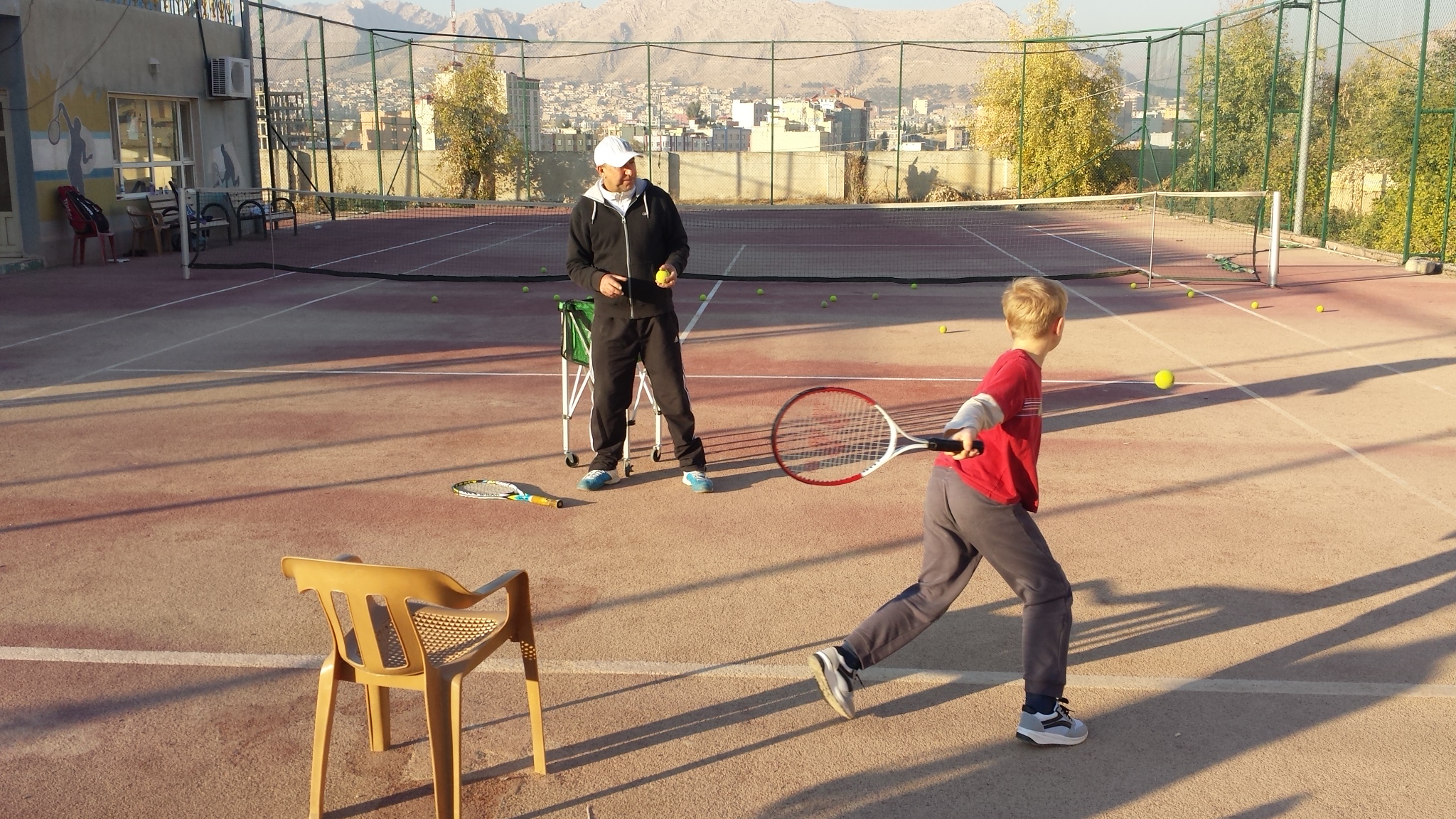
Imagine a young player arriving at a new tennis program. The coach sees the forehand, watches a few points and asks about recent results. The family talks about goals. By the end of the session, everyone has an impression of the player. They may still be working from different pictures.
The player wants to make the school team and keep playing with friends. A parent is wondering whether more tournaments would help. The coach sees a return that breaks down against a deeper serve. Nobody has yet mentioned that the player can train only twice a week, has recently changed schools and finds a long list of technical instructions difficult to use during a point.
This is an illustrative situation, not a reported case. It shows why development needs a conversation that connects the person, the tennis and the conditions around both. Those details change what a sensible next step looks like.
Start with the player's own answer
Before deciding how much tennis a young person needs, ask what they want from it now. Their answer might involve competition, improving a particular shot, belonging to a team or having a place where they feel capable. Ambitions can be serious without being settled for life.
Ask the player first, using language that fits their age. Then hear from the parent and coach. If their answers differ, record the difference rather than producing an adult-approved version that sounds unanimous. A child can want to improve and still be uncertain about traveling every weekend.
This approach is already present in established coaching guidance. The LTA's performance coaching principles begin with understanding the person and include family relationships, individual coaching and development planning. The useful challenge is making those principles visible in ordinary decisions, including decisions outside elite programs. Source 1
A private lesson can be personalized, but its format does not guarantee that anyone is connecting the broader plan. Equally, a thoughtful group coach can adapt tasks and communication to individual players. Families should ask who reviews the overall picture and how observations from lessons and matches reach that person.
Look at what the player does in context
A player may run quickly but struggle to adjust to the ball's depth. Another may move comfortably in a familiar rally and lose that organization when the opponent changes pace. Calling one athletic and the other uncoordinated tells a coach very little about the next practice.
Useful observations name the situation. Does the player recognize the ball early enough? Can they make room for contact? Can they control direction when moving sideways? Does a skill remain available when points are scored?
Biomechanics belongs in this conversation as the study of how the player produces and controls movement. Coaches can consider how the body and racket work together under the demands of a particular shot. They should also leave room for individual variation instead of treating resemblance to a professional's stroke as the main objective.
For example, the same high-bouncing feed can present a different contact problem to two players of different heights. A coach might explore court position, recognition and contact timing before changing the swing. The useful question is which adjustment helps each player handle the ball. Height is part of the situation; it is not a complete explanation of either player's ability. This is a coaching example, not a rule assigning a playing style to a body type.
Touch deserves the same care. Record what the player can control, such as changing the depth of a short-court ball or absorbing an incoming volley. A fluid-looking swing or a powerful serve does not establish a permanent player type. A coach should not infer resting muscle tone, a medical condition or an unchangeable physical limitation from how someone looks while hitting.
Research on 180 competitive Polish players aged 10–12 found that changes in coordination and tennis-skill tests varied by task, age and sex over a year. That is a reason to look at several capabilities over time. It is not a set of expectations to impose on an individual child, and the study did not establish future professional potential. Source 2
In practical terms, preserve useful strengths while developing the rest of the game. A player with good touch still needs opportunities to build pace and movement; a powerful player still needs variety and control. Progress in these areas should be observed rather than assumed from a label.
Leave room for different development timelines
Two players of the same chronological age may be at different stages of physical development. They may also have very different amounts of coaching, match experience and opportunity behind them. Biological maturation and training experience are separate considerations. Neither should be guessed from a ranking or appearance.
The IOC's consensus on youth athletic development describes development as an individual, changing process shaped by physical maturation, behavior and environment. Its broader aim includes sustained participation and well-being alongside performance. Source 3
Tennis research provides a useful caution about prediction. In a study of 86 highly ranked Dutch juniors, physical fitness tests at under-13 did not predict ranking at under-16. The authors supported monitoring development but cautioned against using those tests alone for selection within a similarly strong group. Source 4
That does not make early performance meaningless. A larger study of 1,010 Dutch players found that earlier ratings were associated with performance at 16, while identifying different developmental trajectories. Its outcome was adolescent performance, not a professional career. Source 5
For a family, the practical response is to ask what the evidence describes today and when it will be reconsidered. A player developing later deserves continued opportunities to learn. Nobody can promise that a late developer will catch up, just as an early advantage cannot guarantee a professional future. Our junior-selection guide examines that distinction in more detail.
Understand how this player experiences coaching
Personality can inform how a coach starts a conversation, but it should not settle what the player can become. A quiet child may be thinking carefully, unsure of the question or uncomfortable speaking in a group. A highly expressive child may need help recovering between points. Neither observation establishes competitive courage or its absence.
Ask concrete questions: When is feedback easiest to use? Would a demonstration help? What happens when the coach gives several instructions at once? Does the player want a brief check-in after a match or some time first?
Record these as preferences to try and review, not permanent learning types. The player who wants a demonstration for a new movement may prefer a short verbal reminder once the task becomes familiar.
Pressure also needs context. If serving changes when a score is introduced, observe the change and ask what the player notices. Check the task, preparation and environment before settling on an explanation. Emotional difficulty is not an invitation for a coach to diagnose a child. Persistent distress or concerns extending beyond tennis call for appropriate qualified support.
Our article on building confidence in junior tennis explores how feedback can stay specific while adults maintain clear behavioral boundaries.

Build a plan the family can sustain
Court access, transport, school, finances, practice partners and the availability of trustworthy coaching affect what a player can actually do. They belong in the development conversation before the calendar fills up.
A family with two reliable local sessions may need a different arrangement from one with daily academy access. The coach can give each available session a purpose, help find suitable partners and choose competition that answers a useful question. A plan requiring travel the family cannot sustain needs to change; it does not reveal a lack of commitment in the child.
Parents contribute practical knowledge and support. They can explain scheduling limits, notice changes in the child's experience, help find resources and advocate when something is wrong. The coach remains responsible for coaching decisions within their competence, and programs remain responsible for the environment they provide.
Harwood and Knight's position paper on sport parenting treats parental support as a set of interpersonal, personal and organizational skills, adapted to the child and sporting context. It does not offer a formula by which the right parent produces a professional athlete. Source 6
Ask what information is necessary. A coach may need to know the affordable training commitment without receiving the family's income, debt or private circumstances. The junior budget worksheet can help a family understand its own costs before deciding what to share.
Keep a player development profile
We propose a short record that the player, family and coach can update together. The profile describes the current picture and its uncertainties. The development plan turns that picture into agreed work. A practice note records what happened during a particular session. They should inform one another without becoming three separate administrative projects.
The profile should contain:
- The player's goals and what they enjoy about tennis, in their own words.
- Current strengths and areas to develop, supported by examples.
- Relevant training and competition history, including significant breaks and previous approaches that helped or did not help.
- Communication preferences and the player's account of pressure or frustration.
- Practical opportunities and constraints, including school, time, partners, transport and the sustainable commitment.
- One or two agreed priorities, who will support them and what evidence will be reviewed.
- The assessment date, contributors, unresolved questions and a review date or earlier review trigger.
The profile is a discussion tool. It has no overall talent score, predicted career level or requirement to disclose private health information. It should make a decision easier, not make the child feel continuously evaluated.
Download the editable two-page player profile (Word). Complete it together, retain your own copy and share only the information needed.
GEN TENNIS / DEVELOPMENT PROFILE
Keep evidence and interpretation separate.
- Listen to the player
What do you want, and what do you notice? - Record the observation
What happened, in which task, and how often? - Name the working interpretation
What might explain it? What remains uncertain? - Agree on one next step
What will we try, who will help, and what will we observe? - Review and revise
Ask the player again. Compare the evidence and update the plan.
Separate the observation from the explanation
A fictional profile entry: Alex
In two recent sessions, Alex controlled short-court exchanges but contacted several deeper forehands close to the body. The coach recorded the same pattern in a practice set.
“I can see it coming, but I feel rushed when it lands deep.”
Depth recognition or spacing may be contributing. The observation does not yet explain which part is most important.
The coach will use a manageable variation in depth, observe the response and choose one useful adjustment before returning to points.
Revisit after the agreed practice block. Compare similar situations and ask whether the change remains useful with an unfamiliar partner.
This entry gives a new coach something to investigate. “Poor movement” would give them much less, while “low confidence” would jump to an explanation the evidence has not established.
The technical example connects with GEN Tennis's FLOW approach, which considers reading the ball, moving, organizing the stroke, striking and recovering together. FLOW is currently presented as an adult development method in beta, with coached participation closed. Here it supplies a way to organize coaching questions, not a validated junior assessment or a claim of superior results.
Use the profile to choose a priority, then connect it to the existing development-plan guide and, where useful, the 12-Week Pathway Planner. The length of the plan should fit the player and the question. Twelve weeks is not a prescribed rate of improvement.
Review the profile and control what travels
Agree on a review date when the profile is created. A check-in after six to eight weeks is one possible starting arrangement, not an evidence-based universal interval. Review earlier if the player changes coaches, returns after a break, faces a different school schedule, changes goals or finds that the work no longer fits.
Ask what changed, what remains uncertain and whether the player's experience supports the adults' interpretation. If a hypothesis was wrong, correct it. Keep old entries dated so that an outdated description does not become a permanent judgment.
When moving to a new coach or academy, share a concise version: current goals, useful observations, what has been tried, relevant practical limits and the next review question. Give the player an age-appropriate opportunity to correct it and participate in deciding what is shared, with their parent or guardian. A new coach should use it as context and make fresh observations.
Keep medical records and sensitive family details separate. Any necessary health-related participation guidance should come from an appropriate professional and reach only those who need it. Do not upload a child's identifying or sensitive information into public tools or broadly shared documents. Privacy arrangements must still allow adults to act on safeguarding concerns.
Begin with one useful conversation
For the first meeting, complete the player's own goals, record one strength, examine one recurring difficulty and agree on a manageable next step. Leave uncertain fields open. A short record that gets used is enough to begin.
Review success in terms the player can recognize: a skill they can now use, a practice arrangement that works, a clearer conversation with a coach or a healthier commitment to the game. Professional ambitions can belong in that picture. So can school tennis, club competition and the wish to keep playing for years.
The purpose is to understand this player well enough to make the next decision with them.
Our editorial standards · Questions or corrections? Contact the editor.
Sources
- LTA, Performance Coaching Principles
- Waldziński and colleagues, One-year developmental changes in motor coordination and tennis skills in 10–12-year-old male and female tennis players
- Bergeron and colleagues, International Olympic Committee consensus statement on youth athletic development
- Kramer and colleagues, Prediction of Tennis Performance in Junior Elite Tennis Players
- Rikken and colleagues, Developmental performance trajectories of talented tennis players during adolescence
- Harwood and Knight, Parenting in youth sport: A position paper on parenting expertise