Look past the colorway
See the official KK4411 listing and black-and-maroon product photographs.
A striking pair of shoes can make you reconsider what is in your tennis bag. That is a perfectly good reason to look. Before buying, though, turn the attraction into a more useful question: what would this shoe need to do better than the pair you already wear?
The adidas Barricade 14 in Core Black/Core Black/Maroon is product code KK4411. At our check, adidas's U.S. listing showed $128, reduced from a listed $160. Price and size availability can change. This is a current colorway listing, not evidence of a new model launch today: adidas introduced the Barricade 14 on December 1, 2025. We have not established the release date of this particular colorway.
GEN Tennis has not playtested this shoe. This article compares adidas's product information with original testing by Tennis Warehouse, RunRepeat and TennisCompanion, then explains what a prospective buyer can usefully investigate. The reviews concern the Barricade 14 model; they do not establish that each reviewer tested KK4411.
What changed in the construction
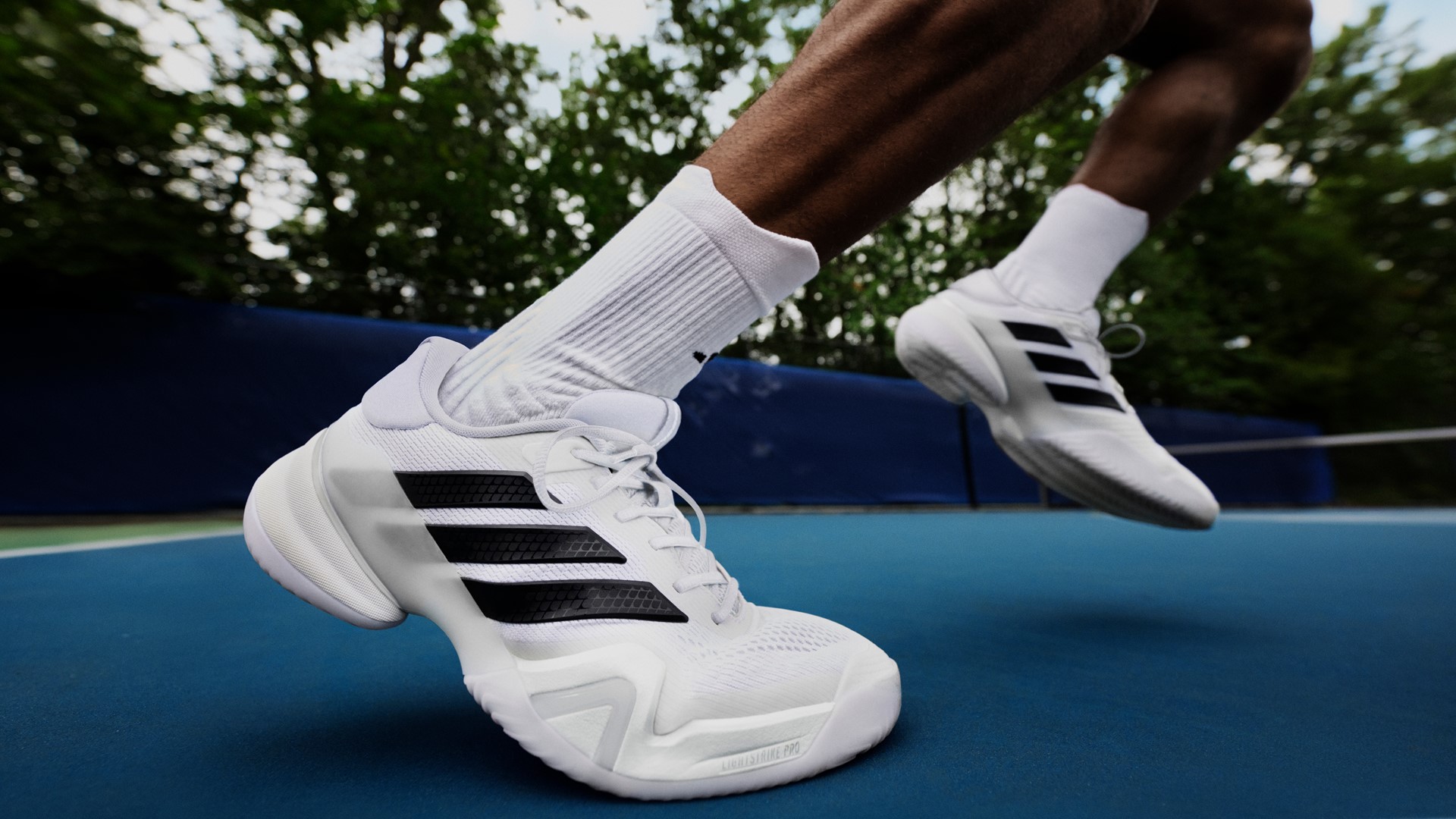
In its launch announcement, adidas introduced a LIGHTTRAXION outsole, LIGHTSTRIKE PRO foam at the forefoot and REPETITOR foam at the heel, together with changes to the chassis, last, collar and tongue. The company positioned the redesign around lower weight, control and durability. Those are the manufacturer's design claims, not our findings.
Separate the parts when reading the description. The outsole is the surface that meets the court. The cushioning sits above it. The upper and lacing hold the foot, while the last is the form around which the shoe is built. A familiar foam name cannot answer whether the front of the shoe feels comfortable to you, and a secure heel does not necessarily establish a good fit everywhere else.
That distinction is particularly useful here. Instead of asking whether the new Barricade is simply better, examine the tradeoffs: the way it moves, the way it holds your foot, the sensation under the forefoot and how the areas you normally wear down are constructed.
The on-court reports are not unanimous
Tennis Warehouse's June 2026 men's playtest found mixed comfort and recurring reservations about forefoot cushioning. Several testers also described unusually sticky traction. Chris reported a hole under the right big toe after about 15 hours of hitting. Troy saw wear after roughly 15–20 hours but judged the outsole more favorably; Jason was satisfied after 15–18 hours. These are individual experiences, not a universal replacement timetable.
TennisCompanion's Jon Crim offered a broadly positive assessment of the update's stability, maneuverability and ventilation, while identifying outsole wear, toe-drag abrasion and a firm ride as tradeoffs. His favorable overall impression is useful alongside the concerns, rather than a reason to discard them.
Read the original accounts for the conditions and preferences behind a verdict. A reviewer who likes strong grip may welcome something another player finds restrictive. Tennis Warehouse is also a retailer, and TennisCompanion discloses affiliate links. Naming who did the testing and how the publication earns money helps you interpret the evidence; it does not make every observation invalid.
What the laboratory adds
RunRepeat measured its men's U.S. size 9 Barricade 14 at 380 grams, compared with 394 grams for the Barricade 13 in its testing. Its abrasion test left a 2.6-millimeter dent in the outsole. That adds a measured wear concern to the discussion, but a controlled abrasive-tool test cannot predict how many sessions your pair will last.
Our reading of the combined evidence is that durability deserves investigation, particularly if you already wear through shoes quickly. It does not establish that every pair will fail early. Nor does a lower measured weight settle how comfortable, secure or easy to move in the shoe will feel to a different player.
Do not average these publications' scores into a supposed definitive rating. Their methods, samples and scales differ. The useful comparison is the question each source answers: the brand explains the intended construction, players report what happened during their tests, and the laboratory measures specified properties under its own conditions.
Start your fitting with the pair you already own
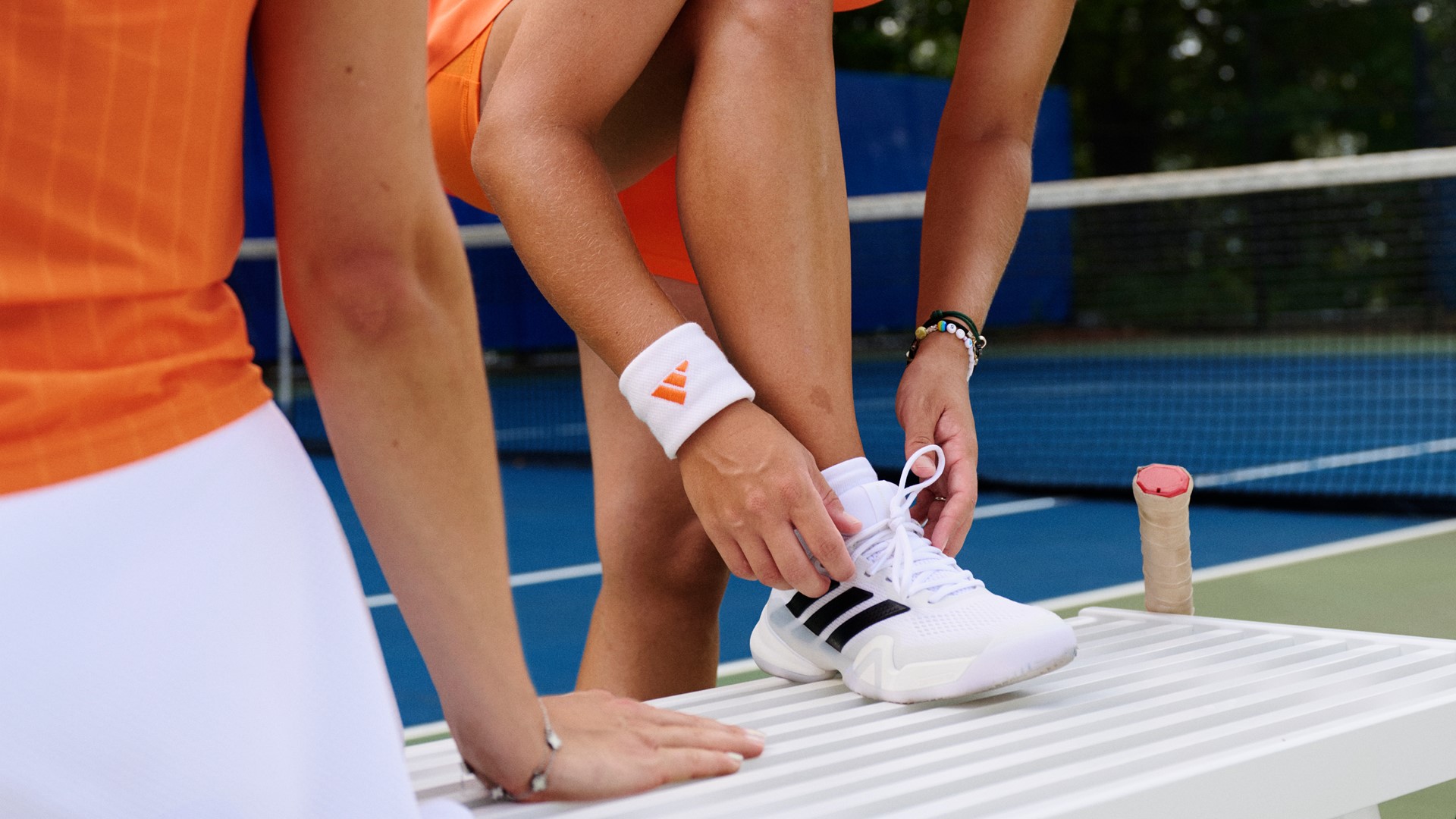
Before trying the Barricade 14, inspect your current shoes. Is the rubber wearing beneath the big toe, along the outside edge or at the toe tip? Is the upper damaged? Or is the real reason for replacement a fit you never liked? Take photographs of the wear and bring the old pair when possible. This gives a fitter a specific conversation to work with.
If you like the fit of your Barricade 13 and mainly want less bulk, compare the two directly rather than assuming the family name guarantees the same feel. Use the socks and any insoles you normally play in. Try both feet. Notice heel movement, pressure along the sides, toe space and the sensation beneath the ball of the foot.
Within the shop's permitted fitting conditions, move gently forward, sideways and into a controlled stop. Walking a few steps is only an initial check. Do not accept toe pressure or persistent rubbing simply because a review says the shoe breaks in. Equally, a comfortable shop fitting cannot establish long-term wear or full-speed court traction. Ask about the return conditions before taking the shoes onto a court.
Who should give it a closer look?
For a player who values a connected, relatively firm sensation underfoot, the published reports provide a reason to try this model. For someone seeking a distinctly plush forefoot, they provide a reason to make cushioning a decisive part of the comparison. Neither preference can be resolved from the colorway or the name of the foam.
For a frequent hard-court player who drags the toes and replaces shoes often, make wear and replacement cost central to the decision. Ask the seller exactly which outsole guarantee, if any, applies to the product and your country. Check the qualifying damage, claim procedure and exclusions. A warranty should be understood before purchase; it is not a promise that the shoe will feel right or last a particular number of months.
KK4411 is listed as a men's model. These men's-model reviews are not a fitting recommendation for every woman or junior, nor do they establish identical construction across differently labeled versions. Choose the actual size and variant for the person's feet and playing needs. For a developing junior, revisit fit as the player grows rather than buying extra length as a substitute for the correct fit now.
A useful candidate, with questions worth asking
The black-and-maroon Barricade 14 earns attention as a design choice. The practical decision comes afterward. Identify what you want from a replacement, compare the fit with something you know, and decide how much the reported tradeoffs matter for your tennis.
For an occasional player replacing shoes because the fit is poor, comfort and retention may decide the purchase. For someone who repeatedly wears holes through an outsole, the same evidence can justify a much more cautious shortlist. There is no contradiction: the priorities are different.
Our recommendation is to use the Barricade 14 as a specific comparison, not an automatic upgrade. A product analysis is most useful when it helps you ask a better question before spending, rather than supplying a confident verdict about feet we have never seen.
Our editorial standards · Questions or corrections? Contact the editor.