A spin promise still needs a court test
You like your current racket until a rally speeds up. Then the ball lands short, the contact gets late, or a bigger swing sends it long. A new frame promising heavy spin is an appealing answer. Before buying one, decide which of those problems you actually want it to help you solve.
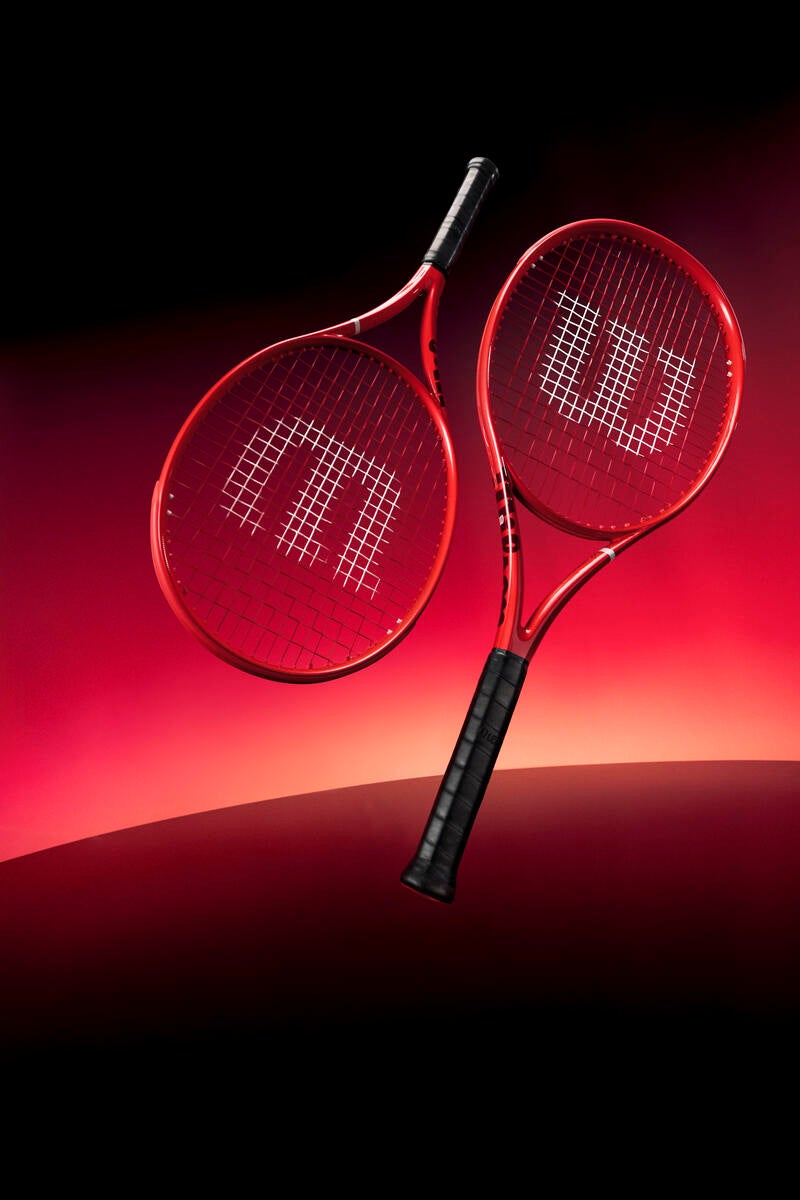
Wilson’s red DEFYER family gives that question a concrete focus. This is a look at the manufacturer’s design claims and the retail 100 and 100L specifications, followed by a practical way to compare them. GEN Tennis has not playtested these rackets, measured their spin or established that either will improve your results.
What Wilson has introduced
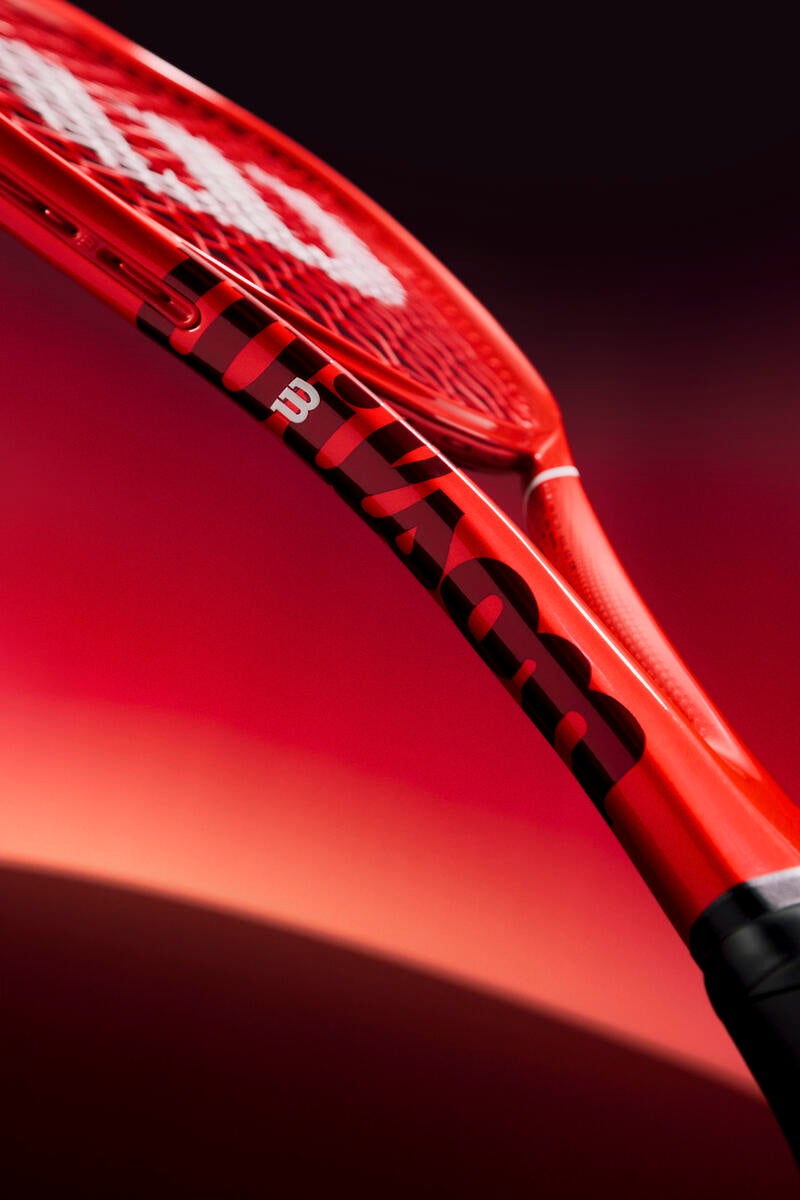
Wilson’s Japanese launch announcement, published July 10, 2026, describes a family developed around repeatable spin. It identifies TORQ Shaft, an Airfoil Bumper and Si3D as design elements intended to influence stability, maneuverability and frame flex. Those are Wilson’s explanations of its engineering, not independent measurements of the benefit to a club player.
The release also separates a regional Concept Edition, with REDLINE lettering on the shaft, from standard DEFYER-branded versions. Its Japanese launch dates should not be read as a worldwide availability calendar. The photographs here are official family launch imagery; they do not establish the specification of every pictured racket.
For a player shopping now, the useful decision is whether a particular retail model deserves a place beside your current racket in a demo.
100 or 100L: read the whole specification
| Specification | 100 V1 | 100L V1 |
|---|---|---|
| Model | WR21540 | WR21550 |
| Head size | 100 sq in | 100 sq in |
| String pattern | 16 × 19 | 16 × 19 |
| Unstrung weight | 300 g | 285 g |
| Unstrung balance | 31.5 cm | 32 cm |
| Displayed U.S. price | $299 | $289 |
Wilson’s U.S. listings put the DEFYER 100 V1, model WR21540, at $299 and the DEFYER 100L V1, model WR21550, at $289 when checked October 23, 2026. These are displayed U.S. prices, not a promise of checkout price or stock in your grip size.
Both have a listed 100-square-inch head and 16×19 string pattern. The 100 is specified at 300 grams unstrung with a 31.5-centimeter unstrung balance; the 100L is 285 grams with a 32-centimeter balance. The lighter model’s balance point is therefore farther toward the head. Weight alone does not describe how the two will feel during a swing.
The table uses manufacturer specifications, not measurements of individual retail samples. It does not rank spin, comfort or stability. Wilson’s numerical power, spin and control ratings are brand ratings; we have not treated them as independent test scores.
Choose a comparison that answers your problem
If your present racket feels difficult to organize late in a session, include the 100L in the comparison. That is a reason to try it, not proof that it will solve late contact. If your current frame is already around 300 grams unstrung and manageable through a full session, the 100 may be a more relevant first comparison. Neither weight makes a racket automatically suitable for a particular age or ability.
For a junior moving between rackets, start with the player’s actual preparation, contact and ability to repeat the task. Do not buy the heavier option as a reward for improving, or choose the lighter one solely because the player is young. Our first-racket guide explains the readiness questions to resolve before a purchase.
A pro’s involvement in development is useful background, but cannot settle your choice. Wilson itself warns that professionals often customize equipment and that endorsed retail specifications may differ from match equipment. A familiar name or the same red finish is not evidence that you are buying the same setup.
A demo plan that goes beyond your best forehand
Bring your current racket and write one question before you start: “Can I keep useful depth when the rally gets faster?” is more helpful than “Does this racket have more spin?” Keep the balls, court and hitting partner as consistent as practical. Ask the shop what strings and tension are in each demo. If the setups differ, record that difference rather than attributing every sensation to the frame.
Begin with comfortable crosscourt rallies. Alternate rackets in short blocks, then return to your own. Notice whether the ball reaches the intended area without a swing you cannot sustain. A few spectacular shots are less useful than a repeatable pattern of contact, depth and misses.
Next, include situations that expose the reason for changing: a faster incoming ball, a return, a ball that leaves less preparation time, and the serve. If you play doubles, add volleys. Keep the challenge appropriate to your level. Do not turn a demo into a contest to swing as hard as possible.
Write down what happened in plain language: “More balls landed short on the faster feed,” or “I could use my usual swing and reach the target.” Include misses and awkward contacts. Repeat another day if the decision is close. This is a practical comparison method, not a laboratory test or a way to calculate spin rate from what the ball appears to do.
When the right answer is to keep your racket
If your existing racket performs just as well in the situations that matter, the demo has still done its job. You have a reason to keep it. If one DEFYER version helps you repeat your intended shot and remains manageable across the session, ask for another trial in a string setup you understand before committing.
When the difference disappears as soon as the feed changes, investigate the task with your coach before crediting or blaming the equipment. Keep the frame, strings and your own execution separate in the conversation. Our racket, grip and strings guide gives the broader comparison; this narrower test should leave you with a specific reason to shortlist the 100, the 100L, or neither.
Our editorial standards · Questions or corrections? Contact the editor.
Sources
Keep reading.
How to choose a tennis racket: fit, strings and model comparisons