
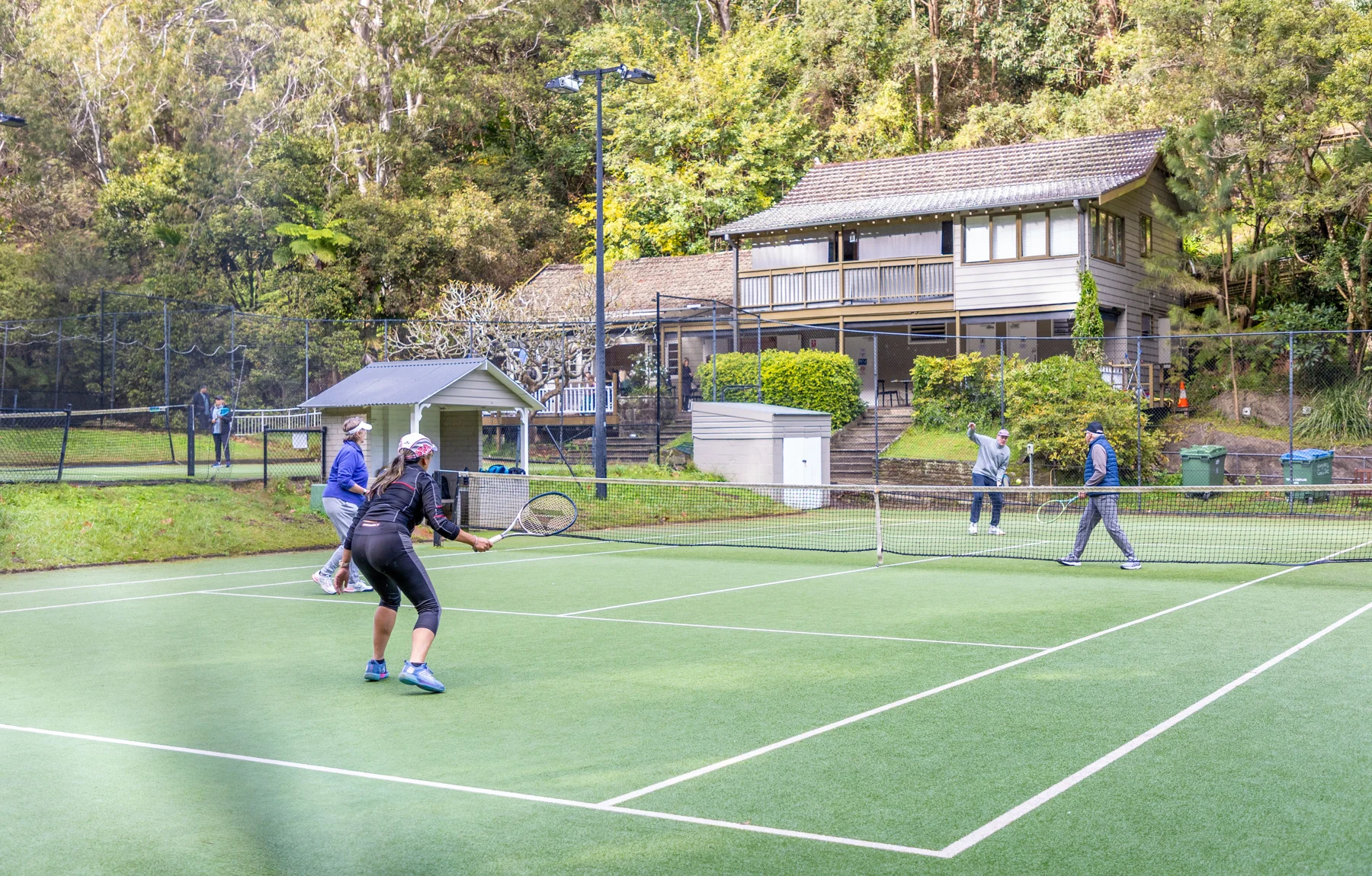
Find your rhythm again
The first session back has a strange emotional charge. You remember how tennis used to feel: the clean strike, the automatic split step, the serve that seemed to organize itself. Then the ball arrives, your feet are late and the court feels several feet wider than you remembered.
That gap can make players do too much too soon. They chase the old level, turn a return session into a fitness test and judge the day by winners, speed or the score. A better goal is simpler: leave the court moving more freely, seeing the ball earlier and looking forward to the next session.
This 45-minute outline is for an adult recreational player returning after weeks or months away, with a practice partner and a court. Each block includes pauses, water and ball collection; shorten or skip a block when needed. It is a planning example, not a target you must complete. It is not rehabilitation advice. If you are returning from injury, illness or surgery, or if pain changes how you move, get the appropriate medical or rehabilitation guidance before using a general session plan.
Minutes 0–8: arrive before you hit
Begin away from the baseline. Walk the court, then use a dynamic warm-up that gradually raises temperature and introduces the movements tennis will ask for: easy jogging, side shuffles, arm circles, controlled lunges, trunk turns and a few gentle changes of direction.
The United States Tennis Association describes a dynamic warm-up as preparation for practice or competition: it raises temperature, introduces active range of motion, rehearses movement patterns and wakes up the nervous system. The important word is dynamic. For this session, prioritize comfortable movement before hitting; any stretching afterward is optional.
Keep this section conversational. If you are breathing hard before you pick up a racket, you have already made the first session more difficult than it needs to be.
Minutes 8–18: rebuild contact at short distance
Start inside the service boxes. Rally cooperatively. Use compact swings and try to produce a ball your partner can hit comfortably. If you are practicing alone, use the separate practice planner to choose a session suited to your available space rather than following the partner drills below.
The score for this block is not pace. It is repeatable contact.
Choose one or two cues only:
- see the ball through contact;
- create space between the body and the ball;
- recover to a balanced position after each swing.
Do not attempt to solve every technical issue. Returning players often mistake normal rust for a permanent flaw. Give yourself time to observe before adding another correction.
Minutes 18–30: extend the court in stages
Move back gradually, first to the service line, then toward the baseline. Keep the cooperative objective. Aim through a large central lane rather than at corners. Let the rally teach your feet how much time and space full-court tennis requires.
Try three short rounds:
- Crosscourt forehands, with enough margin to sustain six or more balls.
- Crosscourt backhands, using the same cooperative target.
- Alternate directions only after balance and contact improve.
If the rally breaks down repeatedly, step in again. That is not failure. It is the session regulating itself.
This is also where intensity can rise modestly. Public-health guidance distinguishes general movement from more vigorous activity and emphasizes that regular physical activity supports health. Your first day back does not need to satisfy every weekly exercise target at once. Consistency across weeks matters more than one punishing afternoon.
Minutes 30–38: add serve and return without a scoreboard
If serving feels comfortable and familiar, begin with easy, controlled serves well below your maximum effort. Start with smooth motion and a generous target. Ten accurate serves that feel coordinated are more useful than fifty maximum-effort attempts.
On return, begin with a partner feeding or serving at manageable pace. Use a compact preparation and direct the ball through the middle third. The aim is to reconnect the serve-return sequence without making it a contest.
If the shoulder, elbow or back feels uncomfortable, stop the serving block. A return session is not the moment to negotiate with pain.
Minutes 38–43: play one constrained game
If cooperative hitting feels manageable, try a short game, stopping when the five-minute block ends. Otherwise continue the easy rally or finish early. If you play points, choose one constraint:
- serves start at reduced pace;
- the first two balls must land beyond the service line;
- only the middle two-thirds of the court count;
- or every point starts with a cooperative feed.
A constraint keeps the decision-making that makes tennis enjoyable while preventing the session from turning into a test of your former identity.
Notice what happens under light pressure. Do your feet stop? Does your swing speed change? Do you rush between points? Those observations are useful inputs for the next session, not reasons to extend today's session until the problem disappears.
Minutes 43–45: close the loop
Walk for a minute, then use gentle static stretching if it feels good. Record three notes:
- What felt easier by the end?
- What broke down when the point became less predictable?
- What is the one focus for the next session?
Use a simple 1–5 rating for energy, movement confidence and enjoyment. Do not rate your entire tennis ability. You are measuring today's experience so that the next session can be better designed.
What should session two look like?
If you felt comfortable during the session and afterward, consider another easy session when you feel ready. Repeating or shortening the outline is fine. If you choose to extend it, change only one element: a few more full-court rallies, a second short game, or a slightly longer serve block. Do not increase volume, pace and competitiveness at the same time.
If the first session left you unusually sore or depleted, shorten the next one. If pain persists, seek appropriate professional guidance. The most productive return is the one that becomes a routine.
Tennis gives immediate feedback, but not always accurate judgment. A mishit after months away may say nothing about your potential. A slower first step may simply need repetition. The useful question is not, “Am I as good as I was?” It is, “Did this session make the next one more likely?”
That is how rhythm comes back: not in one dramatic afternoon, but through a series of sessions that are good enough to repeat.
Use the tools for your next visit
The practice planner can start with 45 minutes and a partner selected. It creates its own adaptable template; it does not reproduce the six blocks in this article or assess readiness to return. Keep your energy, movement confidence and enjoyment notes separately.
The session structure is GEN Tennis editorial guidance, not a validated rehabilitation program or a promise of a particular result.
Our editorial standards · Questions or corrections? Contact the editor.