Another way to belong to tennis
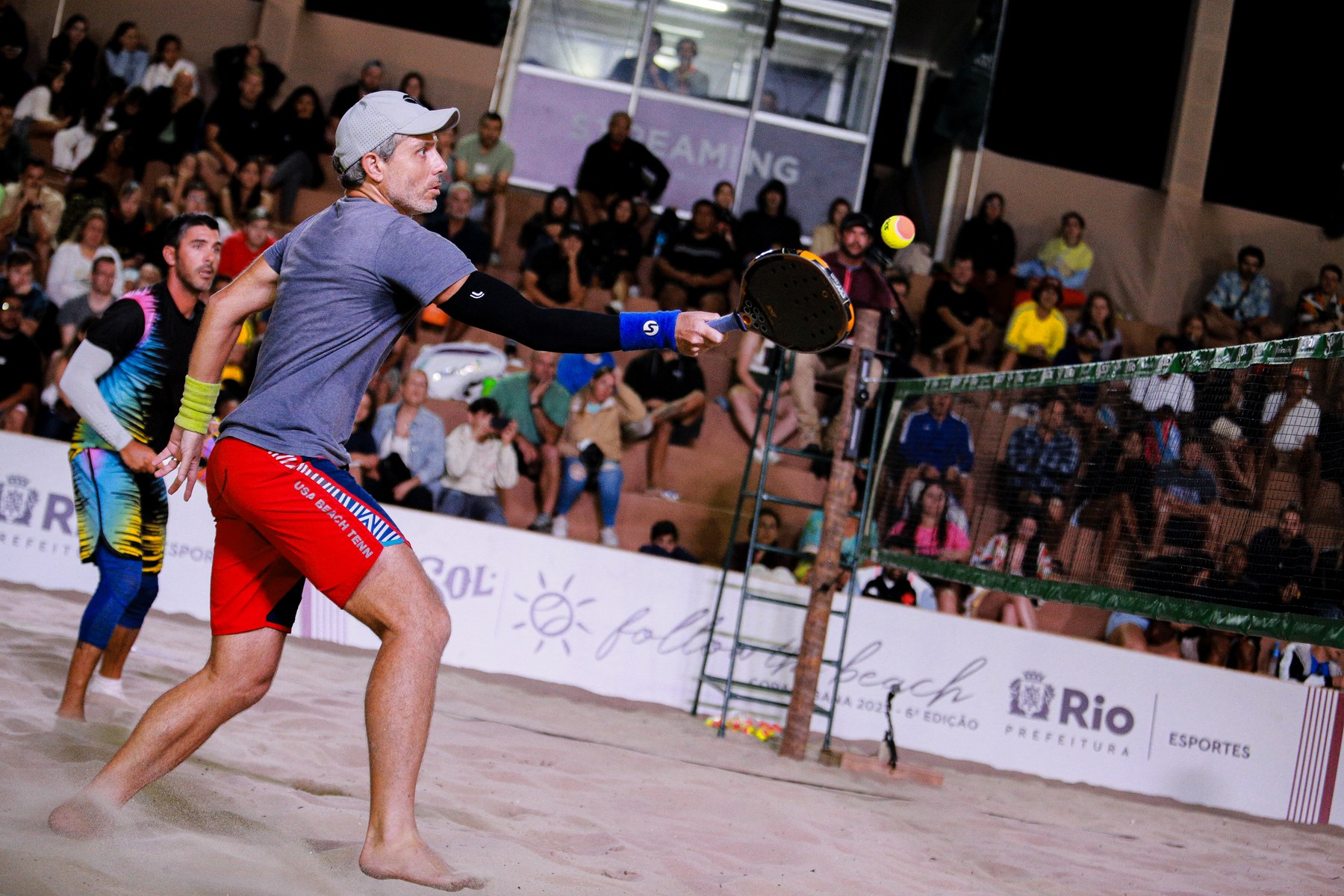
You can change the court and still recognize the pleasure: reading an opponent, finding the ball, choosing a reply and sharing a point with someone across a net. Beach tennis offers that familiarity in a different setting. For a tennis player looking for a more social outing, or a family curious about a game beyond the usual court booking, it deserves a serious look.
At GEN Tennis, we are interested in formats that give people more reasons to keep playing. Our starting question is not whether a variation is pure enough to pass a test. It is what remains recognizably tennis, what changes, and whether the experience makes participation more appealing. Beach tennis belongs in that conversation both as a member of the tennis family and as a distinct competitive discipline with its own skills.
It can be an alternative to pickleball for someone seeking a compact, social racket game. That does not make the two interchangeable, or establish that one is better. Access to a suitable sand court and a welcoming group matters more than a theoretical argument about which sport should win a new player.
The difference you notice on the first point
The ball never gets a bounce. Once it touches the sand, the point is over. Your side returns it with one strike: there is no volleyball-style sequence of a pass, a set and a hit. That turns the rally into a continuous exchange of volleys, overheads, blocks and lifted replies.
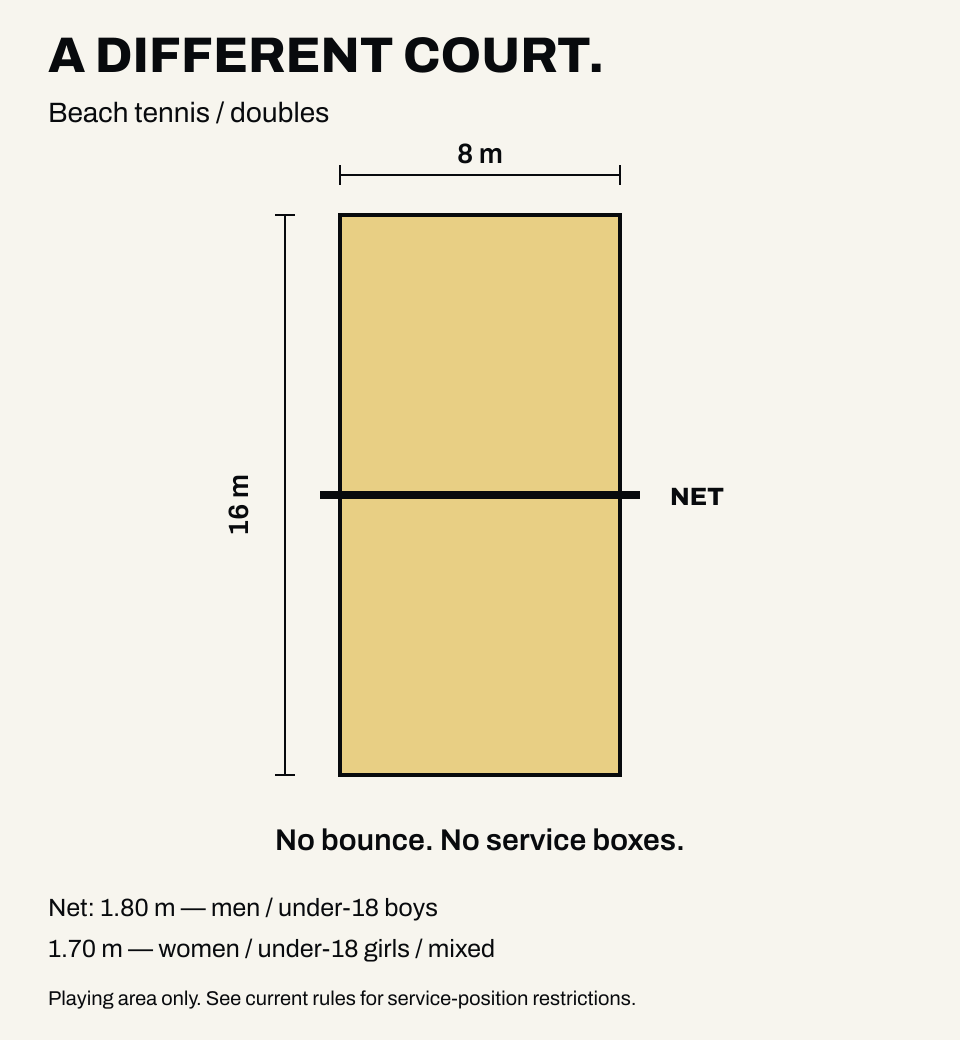
For doubles, the regulation court is 16 meters long and 8 meters wide. Players use solid, unstrung paddles and a low-compression Stage 2 orange ball. The 2026 rules set the net at 1.80 meters for men and under-18 boys, and 1.70 meters for women, under-18 girls and mixed doubles. Those heights matter: this is not ordinary tennis with sand beneath the baseline.
Games use the familiar 15–30–40 progression, but without advantage scoring. There is one serve, no service let and no second chance after a service fault. The serve can land anywhere in the receiving court; there are no diagonal service boxes. In mixed doubles, men must serve underarm. Before entering a competition, also check its current service-position restrictions and match format rather than relying on a casual session’s house rules.
What a tennis player brings—and has to relearn
In FLOW Tennis, reading, moving, organizing, striking and recovering belong to one connected task. On sand, that offers a useful way to frame an exercise—but our bounce checkpoint for a groundstroke does not apply to a game with no bounce.
A tennis player already knows that the ball and the opponent provide information. Watching the incoming flight, preparing before contact becomes urgent, judging an open space and recovering with a partner all have an obvious place here. A player comfortable at the net may enjoy the immediate exchanges; a baseline player may enjoy discovering a different relationship with touch.
But familiar intentions do not mean identical technique. There is no bounced groundstroke to build the point around. The solid paddle responds differently from a string bed, the higher net changes the available trajectories, and sand changes how you organize your steps. A large swing borrowed from a hard-court forehand can be a poor answer to a fast ball already close to the body.
Our coaching suggestion is to start by controlling the next contact, not demonstrating your strongest tennis shot. Use a manageable feed, give yourself room beside the ball and aim for a reply your partner can continue. Add speed and uncertainty once the exchange works. This is a practical starting exercise, not evidence that beach tennis will automatically improve your conventional tennis results.
Meet Vitória Marchezini, then look beyond one account
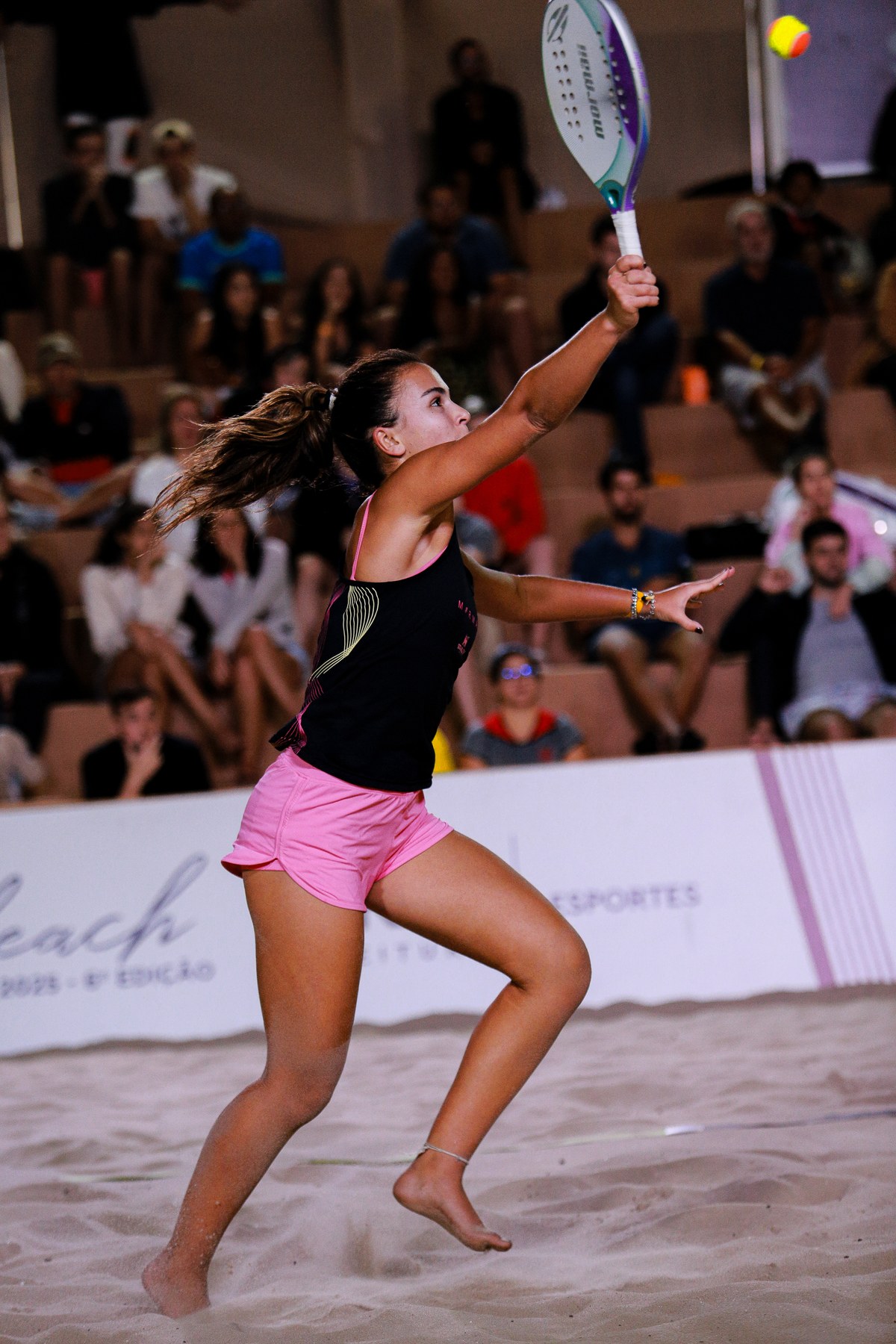
Follow @vitoriamarchezini, check her official player profile, and explore official beach tennis match coverage.
Brazil’s Vitória Marchezini is a useful introduction to the professional game. In the official preview for the September 7–13, 2026 World Championships in Matosinhos, Portugal, she and fellow Brazilian Sophia Chow were the top women’s seeds. That is a dated competitive reference, more useful than treating a social-media bio as a permanently current ranking.
Her Instagram account, @vitoriamarchezini, is a starting point for following an athlete’s public presence. Pair it with official results and full matches. A short highlight can introduce a player; a longer passage of play lets you ask different questions: who takes the middle ball, how does the partnership handle a lob, and what happens immediately after a defensive reply? Watch the exchanges between spectacular finishes as well as the finishes themselves.
Widen the watchlist to Nicolas Gianotti of France and Mattia Spoto of Italy, the top men’s seeds at those championships, and to women’s pair Patricia Diaz of Venezuela and Rafaella Miiller of Brazil. Italy’s Giulia Gasparri and Ninny Valentini also led the women’s Tour Finals race in the governing body’s July 24 update. These examples show several nationalities and partnerships; they are not an October ranking list or an endorsement of particular equipment.
How the international game is organized
The international circuit sits within World Tennis, formerly the International Tennis Federation. Its Beach Tennis World Tour has a published calendar, regulations and rankings. The 2026 tournament structure includes BT10, BT50, BT100, BT200 and BT400 events, alongside the Sand Series and championship competitions. These labels describe tournament categories; they are not beginner-to-expert lesson levels.
Keep three competitions separate. The World Championships are a major championship for pairs. The World Cup is a national-team competition. The Tour Finals have their own qualification race: the July 24 announcement says the top eight men’s and women’s teams qualify through results at designated events. It schedules the 2026 Finals and New Wave event in São Paulo from November 28 to December 5. Check the official calendar before making travel plans.
International entry is another step beyond joining a local game. The tour regulations cover player registration, entry deadlines and acceptance, including how partners’ rankings affect entry. A local club membership does not itself establish eligibility or guarantee a place in an international draw. Start with the official player-information page and the actual event’s requirements if competition becomes your goal.
Federations create the structure; local organizers create the first session
The national, regional and local roles are easiest to understand through examples. Portugal’s Federação Portuguesa de Ténis hosted the 2026 World Championships and also staged amateur age-group events alongside them. In Brazil, the international governing body’s Continental Cup announcement described delivery with the São Paulo Tennis Federation and endorsement by the Brazilian Tennis Confederation, or CBT. These are different organizational layers, not interchangeable names for one club.
In Britain, the LTA’s beach tennis introduction points readers toward social sessions and local providers. That is the practical end of the system: finding a place to play, someone to teach the first session and a group at a suitable level. The international calendar tells you where tour competition exists; it does not tell you whether a nearby Tuesday evening group welcomes beginners.
For a child, distinguish an introductory activity from a competitive pathway. The international Beach Tennis Junior Tour began in 2020, but its existence does not make every beach session preparation for a professional career. Ask a local provider about age grouping, supervision, equipment, progression and how competition is introduced. If the child is also developing conventional tennis, keep that coach informed rather than assuming every hour on sand serves the same training purpose.
Accessible depends on the person and the place
There are appealing entry points: a small group, doubles interaction and the possibility of borrowing the equipment for a first session. But no-bounce play can feel demanding to someone who needs time to track a ball. Sand movement, heat, wind, travel and venue fees can create barriers of their own. A beach address is not a guarantee of an inexpensive or physically easy activity.
Before buying a paddle, ask for a beginner session and explain your playing background. Find out whether equipment is included, what the surface and facilities are like, and whether you can start at a comfortable pace. Use a designated, maintained playing area with appropriate clearance rather than setting up across a crowded public beach. Bring the practical essentials for the conditions, including water and sun protection.
In your first session, try a cooperative exchange before a scored game. Agree that the purpose is to give the other side a ball it can return. If exchanges end immediately, slow the feed and simplify the task with the coach. Then play a few points and notice whether the competition adds enjoyment or merely exposes a task that was too difficult. You do not have to imitate a professional rally to discover whether you like the game.
Give the variation a useful place in your playing life
For one player, beach tennis might become a holiday game. For another, it could be a regular doubles night or a sport pursued seriously in its own right. For a parent, it might offer a fresh shared activity without turning every outing into a lesson. All of those are legitimate reasons to play.
If your main goal is to improve conventional tennis, retain the practice that goal actually requires. Enjoy the possible connections without treating them as a substitute for learning the bounce, the stringed racket and the movement demands of your normal court. If the goal is simply to keep playing with people you enjoy, a different format can be valuable on its own terms.
This opens our Ways to Play series: a closer look at what different formats preserve, what they change and whom they might help. Beach tennis is a strong place to begin because it makes the distinction visible. The setting changes completely. Reading a ball, choosing a reply and wanting one more point remain familiar.
Our editorial standards · Questions or corrections? Contact the editor.
Sources
- World Tennis — Rules of Beach Tennis 2026 (equipment, court and playing rules)
- World Tennis — 2026 Beach Tennis World Tour Regulations, August 12 revision
- LTA — beach tennis rules and local playing opportunities
- World Tennis — World Championships preview and seeds, September 8, 2026
- World Tennis — Tour Finals and Continental Cup update, July 24, 2026
- World Tennis — World Cup national-team format, December 14, 2025
- World Tennis — Beach Tennis World Tour, calendar, juniors and player information
- World Tennis — governance and current rules
- Vitória Marchezini — official player profile
Keep reading.
Which tennis documentary should you watch: Djokovic, Nadal or Federer?